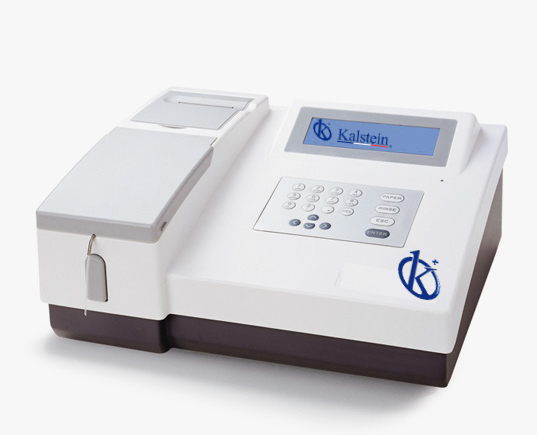
Analyzing Return on Investment and Cost-Benefit for Chemical Analyzers
In today's laboratory environment, understanding the financial implications of equipment purchases is as crucial as the equipment's technical specifications. Chemical analyzers are vital in modern labs, serving various functions from routine diagnostics to advanced research. This article delves into the return on investment (ROI) and cost-benefit analysis for chemical analyzers, focusing on different models that exemplify the current market trends. By understanding the financial dynamics, laboratory managers can make informed decisions that align with their operational goals.
Overview of Chemical Analyzers in ROI Context
The ROI for chemical analyzers can be defined as the financial return gained from the investment in these devices when compared against their purchase and operational costs. This includes not only the initial acquisition costs but also ongoing expenses such as maintenance, consumables, and labor. A thorough cost-benefit analysis helps in comparing different models and making decisions that maximize the laboratory's productivity and efficiency.
Importance of Cost-Benefit Analysis in Laboratories
A cost-benefit analysis provides a structured approach to evaluating the financial viability of purchasing new equipment. For laboratories, this assessment can lead to significant financial savings and efficiencies. It encompasses a detailed look at various costs and potential savings, including labor savings, reduced reagent use, and improved accuracy leading to better patient outcomes. Understanding these factors helps laboratory managers justify equipment purchases and ensure sustainable operations.
Key Factors in Assessing ROI for Chemical Analyzers
Several factors influence the ROI assessment for chemical analyzers, including:
- Initial Cost: The purchase price of the analyzer is often the first consideration. Models like the YR06075, priced at $12,500, provide high throughput but require a larger initial investment.
- Operational Costs: Ongoing expenses such as reagents, maintenance, and repairs must be factored in. For instance, the YR06092 is more affordable at $150 but may have higher operational costs due to less advanced features.
- Throughput: The number of tests that can be performed per hour significantly affects operational efficiency. An analyzer like the YR06075 can perform 560 tests per hour, making it suitable for high-demand environments.
- Maintenance: Regular maintenance can reduce unexpected downtime. Models like the YR05115 and YR05114 are designed for ease of maintenance, saving time and money in the long run.
Comparison of Available Models
| Model | Initial Cost (USD) | Throughput (Tests/hour) | Operational Cost (Estimated) | Best Use Case |
|---|---|---|---|---|
| YR05115 | 800.00 | N/A | Moderate | Routine analysis with moderate testing needs |
| YR05114 | 950.00 | N/A | Moderate | General laboratory use with flexibility in testing |
| YR06092 | 150.00 | N/A | Low | Portable testing in field conditions |
| YR06075 | 12500.00 | 560 | High | High-demand laboratories requiring rapid throughput |
| YR05116 | 1300.00 | N/A | Moderate | Advanced research applications requiring real-time analysis |
| YR06078 | 1100.00 | N/A | Moderate | Versatile laboratory settings needing customizable protocols |
Understanding CAPEX and OPEX in Lab Equipment
Capital expenditures (CAPEX) and operational expenditures (OPEX) are critical metrics in evaluating the financial performance of chemical analyzers. CAPEX includes the costs associated with purchasing the equipment, while OPEX encompasses ongoing costs such as maintenance, consumables, and labor. Understanding the balance between these two can significantly impact a laboratory's financial health.
Evaluating Payback Period for Investments
The payback period is the time it takes for an investment to generate an amount equal to its cost. For instance, if a laboratory invests $12,500 in a YR06075 analyzer, they can calculate how long it takes to recover that cost through savings in labor or increased throughput. A detailed analysis can reveal that investing in high-throughput models, despite their higher initial costs, can lead to quicker payback periods due to their efficiency.
Common Mistakes and How to Avoid Them
Laboratories often make assumptions about ROI that can lead to poor investment decisions. Here are some common mistakes:
- Not Considering Total Cost of Ownership: Many labs focus solely on initial purchase prices and neglect ongoing costs. A comprehensive analysis must include all aspects of ownership.
- Overestimating Throughput: Some laboratories project unrealistically high throughput for certain models. It is crucial to align purchasing decisions with actual laboratory workflows.
- Ignoring Maintenance Needs: Underestimating the importance of maintenance can lead to unexpected costs and downtime. Always factor in maintenance schedules when evaluating equipment.
Frequently Asked Questions
What is the typical ROI for chemical analyzers in laboratories?
The typical ROI for chemical analyzers can vary widely depending on the model and usage. For instance, high-throughput models like the YR06075 may provide quicker returns due to increased testing capabilities, often within 12 to 18 months, while lower-cost models may take longer due to limited throughput.
How do I calculate the payback period for a chemical analyzer?
To calculate the payback period, divide the initial investment by the annual savings from using the equipment. For example, if a YR06075 is purchased for $12,500 and saves $1,000 annually in labor and consumables, the payback period would be 12.5 years.
What factors influence the operational costs of chemical analyzers?Operational costs are influenced by several factors including the cost of reagents, maintenance expenses, and labor costs. Models like the YR06092 are designed to be more cost-effective in terms of consumables, impacting overall operational expenses positively.
How can I ensure accurate cost-benefit analysis for different models?
To ensure an accurate cost-benefit analysis, gather detailed data on all costs associated with each model, including purchase price, expected lifespan, maintenance costs, and operational expenses. A thorough comparison can help identify the best option for your laboratory.
Which chemical analyzers have the lowest operational costs?
Models like the YR06092 are noted for their low operational costs due to their efficient design and use of less expensive reagents. When comparing models, consider both purchase price and long-term use costs.
What metrics should I consider when assessing chemical analyzers?
Important metrics include initial purchase price, throughput, operational costs, expected lifespan, and maintenance needs. Evaluating these aspects can provide a more comprehensive understanding of the analyzer's value for laboratory operations.
Are higher initial costs justified by performance in chemical analyzers?
Higher initial costs can be justified if the model offers significant improvements in throughput and accuracy, as seen with models like the YR06075. The long-term savings and efficiency gains typically outweigh the upfront investment.
How do I compare different chemical analyzers effectively?
To compare different chemical analyzers, create a structured table that includes key metrics such as initial cost, operational costs, and throughput. This method allows for a straightforward visual comparison of their capabilities and costs.
If you are looking for a fusion of innovation and quality, you have come to the right place. At Kalstein, we offer you the luxury of exploring our exclusive catalog of laboratory equipment. We manufacture every device to the highest standards of excellence. Our intuitive and seamless online purchasing channels are designed for your convenience, securing the most competitive prices. Hesitate no longer — we bring science to life, it is time to become part of our community.