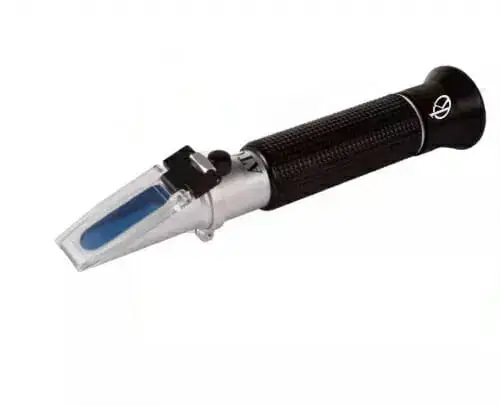
Energy Sustainability and Environmental Footprint Reduction in Salinity Refractometers
In the realm of laboratory testing, salinity refractometers play a crucial role in quality control, particularly in industries that rely on accurate saline concentration measurements. As the global call for sustainability grows louder, it is imperative that laboratory professionals not only consider the performance of their equipment but also its environmental impact. This article delves deep into how salinity refractometers can contribute to energy sustainability and environmental footprint reduction.
Understanding Salinity Refractometers and Their Role in Sustainability
Salinity refractometers are essential instruments used for determining the salinity of solutions, particularly seawater and brine. They provide direct readings of specific gravity and concentration, which are vital for industries such as aquaculture, marine biology, and environmental monitoring. The operation of these devices typically involves optical measurements that can be optimized to be more energy-efficient.
Models Overview
Models like the YR05887, YR05888, YR05913, and YR05914 from Kalstein are designed with precision in mind. The YR05887, for instance, measures salinity levels and specific gravity with ranges that cater to various scientific needs, making it suitable for rigorous quality control in clinical and marine settings.
Energy Consumption and its Importance in Laboratory Settings
Laboratories often consume significant amounts of energy, contributing to a larger carbon footprint. Thus, understanding the energy consumption of laboratory instruments, including salinity refractometers, is critical. The YR05888 and YR05913 models incorporate design features aimed at minimizing energy use while maximizing output.
Energy Use Comparison of Refractometer Models
| Model | Power Consumption (W) | Estimated Annual Energy Cost (USD) |
|---|---|---|
| YR05887 | 5 | 18 |
| YR05888 | 4 | 14 |
| YR05913 | 5 | 18 |
| YR05914 | 4 | 14 |
By selecting models with lower power consumption rates, labs can significantly reduce their energy costs and overall environmental impact.
Materials and Recycling Considerations
Another aspect of sustainability is the materials used in manufacturing laboratory equipment. The YR05887 and YR05914 refractometers are made from durable materials designed for longevity, reducing the need for frequent replacements. Implementing recycling programs for older equipment and parts can further diminish waste.
Water and Reagent Usage in Salinity Testing
Efficient water and reagent usage is paramount in reducing the ecological footprint of laboratory operations. Salinity refractometers like the YR05888 are designed to require minimal sample volume, which not only conserves water but also reduces reagent waste.
Reagent Usage Table for Salinity Testing
| Model | Sample Volume Required (mL) | Annual Reagent Cost (USD) |
|---|---|---|
| YR05887 | 2 | 50 |
| YR05888 | 1 | 25 |
| YR05913 | 2 | 50 |
| YR05914 | 1 | 25 |
By optimizing sample volume requirements, these refractometers help laboratories to further their sustainability goals.
Life Cycle Assessment of Salinity Refractometers
A life cycle assessment (LCA) evaluates the environmental impacts associated with all the stages of a product's life. Understanding the LCA of salinity refractometers can aid labs in making informed purchasing decisions. The YR05914 model, for example, demonstrates a reduced environmental impact through energy efficiency and material sourcing over its lifespan.
Common Mistakes and How to Avoid Them
Laboratory professionals often overlook the importance of selecting energy-efficient equipment. Common mistakes include not assessing the energy consumption of devices and neglecting to consider recycling options for laboratory equipment. It is crucial to research models like the YR05887 and YR05913 that provide detailed specifications on energy use and environmental impact.
Comparison of Available Models
| Model | Power Consumption (W) | Sample Volume Required (mL) | Estimated Annual Energy Cost (USD) | Annual Reagent Cost (USD) | Best For |
|---|---|---|---|---|---|
| YR05887 | 5 | 2 | 18 | 50 | Marine biology |
| YR05888 | 4 | 1 | 14 | 25 | Aquaculture |
| YR05913 | 5 | 2 | 18 | 50 | Quality control |
| YR05914 | 4 | 1 | 14 | 25 | Environmental monitoring |
This comparison illustrates the advantages of selecting models that optimize both energy usage and operational costs.
Frequently Asked Questions
What factors should I consider when choosing a salinity refractometer for sustainability?
When choosing a salinity refractometer, consider energy consumption, material durability, and sample volume requirements. Models like YR05888 are designed for minimal reagent usage and lower power consumption, thus enhancing sustainability.
How can I reduce the environmental impact of my laboratory’s salinity testing?
To reduce environmental impact, utilize models like YR05914 that require less sample volume and power. Implement recycling programs for old devices and ensure that your laboratory follows best practices for waste disposal.
Which salinity refractometer provides the best energy efficiency?
The YR05888 model offers optimal energy efficiency, consuming only 4 watts. Its design minimizes both energy and reagent usage, making it a great choice for sustainable laboratory practices.
How does the choice of materials affect the sustainability of salinity refractometers?
Materials used in salinity refractometers, like those in the YR05913 model, significantly impact their lifecycle and environmental footprint. Durable materials lead to less frequent replacements, thus reducing waste.
What is the impact of sample volume on laboratory sustainability?
Sample volume directly affects water usage and reagent consumption. Models such as the YR05888 require only 1 mL, significantly reducing water and reagent costs, thereby contributing to sustainability goals.
How can I measure the energy cost associated with using salinity refractometers?
Calculating energy costs involves assessing the power consumption of each model. For example, the YR05887 consumes 5 watts, leading to estimated annual costs of around $18, which can be reduced by choosing more efficient models.
What are the best practices for calibrating salinity refractometers to ensure sustainability?
Regular calibration using traceable standards is critical to maintaining accuracy. Models like YR05914 come with automatic temperature compensation, ensuring reliability and fostering sustainability through efficient operation.
How can I find the most suitable salinity refractometer for my application?
Evaluate specific needs based on application, energy efficiency, and environmental impact. The YR05888 model is ideal for aquaculture applications due to its low energy consumption and sample volume requirements.
If you are looking for a fusion of innovation and quality, you have come to the right place. At Kalstein, we offer you the luxury of exploring our exclusive catalog of laboratory equipment. We manufacture every device to the highest standards of excellence. Our intuitive and seamless online purchasing channels are designed for your convenience, securing the most competitive prices. Hesitate no longer — we bring science to life, it is time to become part of our community.