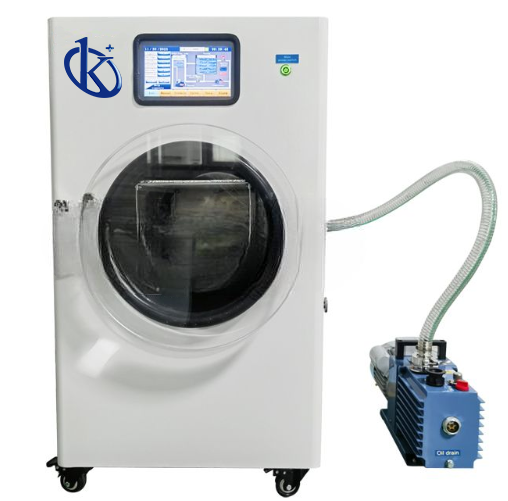
How to Integrate Food Freeze Dryers with LIMS for Data Flow Digitalization
In the fast-evolving field of laboratory technology, the integration of Food Freeze Dryers with Laboratory Information Management Systems (LIMS) is becoming increasingly crucial. This integration not only streamline data flow but also enhances operational efficiency. Food Freeze Dryers are essential for laboratories focusing on preservation and quality control of food products, and understanding how to effectively integrate these systems can lead to significant improvements in laboratory workflows.
Understanding Food Freeze Dryers and Their Importance
Food Freeze Dryers operate through a process called lyophilization, where water is removed from food products after freezing and under vacuum conditions. This process helps in maintaining the structure and nutritional value of food. The key features of modern Food Freeze Dryers include compact design, efficient energy consumption, and user-friendly controls. These features not only enhance the performance of the freeze dryers but also facilitate their integration with LIMS for better data management.
The Role of LIMS in Laboratory Operations
A Laboratory Information Management System (LIMS) is software that helps laboratories manage samples, associated data, and laboratory workflows. It centralizes data storage and offers functionalities such as sample tracking, data analysis, and regulatory compliance management. By integrating Food Freeze Dryers with LIMS, laboratories can automate data collection and reporting processes, thus enhancing accuracy and efficiency.
Key Benefits of Integration with LIMS
Integrating Food Freeze Dryers with LIMS presents several advantages:
- Improved Data Management: Automates data recording from freeze dryers, reducing human error.
- Enhanced Traceability: Enables tracking of samples and corresponding data throughout the lyophilization process.
- Regulatory Compliance: Assists in maintaining compliance with industry standards by ensuring proper documentation.
- Operational Efficiency: Automates workflows, allowing staff to focus on more critical tasks.
Technical Specifications and Comparison of Available Models
| Model | Area of Food Tray (m²) | Power Consumption (W) | Individual Food Batch (kg) | Best for Integration with LIMS |
|---|---|---|---|---|
| YR05984 | 0.4 | 1550 | 4-6 | Medium-sized laboratories |
| YR05983 | 0.1 | 1100 | 1-2 | Home use or small labs |
| YR05985 | 0.6 | 2000 | 6-8 | Research on fruits and vegetables |
| YR06612 | 52.92 | 150000 | 500 | Large scale operations |
Common Mistakes and How to Avoid Them
Several pitfalls can occur when integrating Food Freeze Dryers with LIMS:
- Lack of System Compatibility: Ensure that the freeze dryer and LIMS software are compatible. Conduct thorough technical assessments beforehand.
- Insufficient Training: Staff should be adequately trained on both systems to maximize their functionalities.
- Neglecting Data Security: Implement robust security protocols to protect sensitive data during integration.
Frequently Asked Questions
How can I ensure my Food Freeze Dryer is compatible with LIMS integration?
To ensure compatibility, check the specific model's connectivity options. For instance, the YR05984 offers robust interfaces that facilitate data integration with various LIMS platforms, enhancing operational efficiency.
What are the primary benefits of using LIMS with Food Freeze Dryers?
Using LIMS with Food Freeze Dryers, such as the YR05985, improves data management and traceability, ensuring that all lyophilization processes are documented and compliant with industry standards.
How does LIMS integration reduce errors in laboratory data management?
Integration minimizes human error by automating data collection. For example, with the YR06612, data from the lyophilization process can be directly exported to the LIMS, ensuring accuracy and efficiency.
What is the best freeze dryer model for small laboratories focusing on LIMS integration?
The YR05983 is ideal for small laboratories as it is compact and offers functionalities that support LIMS integration, providing essential data management without taking up much space.
Can integrating LIMS with large freeze dryers like YR06612 improve productivity?
Yes, the YR06612's high capacity combined with LIMS integration allows for efficient management of large batches, optimizing workflow and increasing overall productivity in large-scale operations.
What are the energy consumption parameters for different freeze dryer models?
Energy consumption varies by model; for instance, the YR05984 consumes 1550W, making it a more energy-efficient option for medium-sized laboratories integrating with LIMS.
How does LIMS help in maintaining compliance for Food Freeze Dryers?
LIMS ensures that all data relating to the food lyophilization process is documented appropriately, thereby aiding compliance with industry standards. Models like YR05985 are designed to integrate seamlessly with LIMS for this purpose.
What are the key considerations when choosing a Food Freeze Dryer for LIMS integration?
Consider the model's connectivity options, ease of data transfer, and batch size capabilities. The YR05984, for example, is designed for seamless integration, making it a suitable choice for efficient laboratory workflows.
If you are looking for a fusion of innovation and quality, you have come to the right place. At Kalstein, we offer you the luxury of exploring our exclusive catalog of laboratory equipment. We manufacture every device to the highest standards of excellence. Our intuitive and seamless online purchasing channels are designed for your convenience, securing the most competitive prices. Hesitate no longer — we bring science to life, it is time to become part of our community.