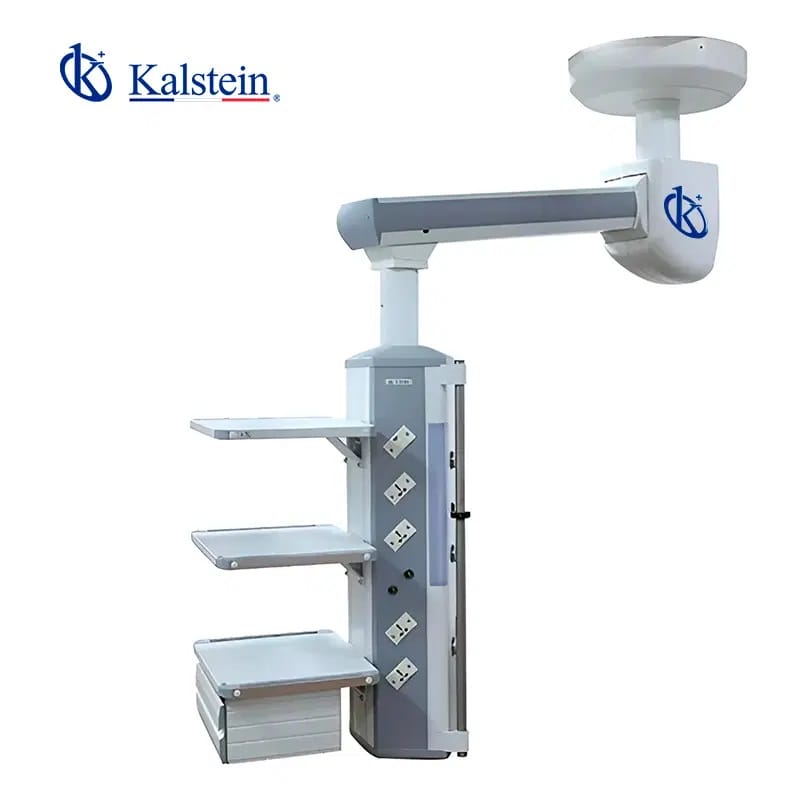
Interpreting Results and Measurement Readings of the YR02083 Anesthesia Pendant
The Single Arm Anesthesia Pendant YR02083 is an advanced piece of medical equipment designed for use in operating rooms, emergency rooms, intensive care units, and recovery areas. Understanding how to interpret the results and measurement readings from this device is crucial for medical personnel to ensure patient safety and effective management of anesthesia during procedures. This article delves into the functionalities, operational parameters, and practical application of the YR02083 in various clinical environments.
Overview of the YR02083 Anesthesia Pendant
The YR02083 anesthesia pendant features a ceiling-mounted design that provides easy access for medical staff. It supports a range of functions including the delivery of gases, power supply for medical devices, and the management of various support apparatuses. Its unique aluminum alloy construction ensures durability while minimizing weight.
| Specification | Detail |
|---|---|
| Model | YR02083 |
| Arm Rotating Radius | 800mm + 800mm |
| Arm Rotating Angle | 340° |
| Braking System | Friction Brake |
| Maximum Load Capacity | 120 kg |
| Standard Gas Outlets | 1 Oxygen (O2), 1 Air, 1 Suction (Vac), 1 Jet Exhaust Emission (AGSS) |
| Power Outlets | 6 x 10A |
| Network Socket | 1 |
| Grounding Terminal | 1 |
| Column Length | 1000mm |
| Extension Arm | 1 (240 x 240 mm) |
Understanding Measurement Readings
The YR02083 is equipped with various interfaces that provide real-time measurements and data necessary for anesthesia management. Understanding these readings is crucial for assessing the anesthetic state of patients. Each output must be accurately monitored to ensure the correct dosages of anesthetics are administered.
Common measurements include the concentration of delivered gases (oxygen and air), pressure levels, and other operational indicators. Familiarity with the units of measurement is essential; for example, gas concentrations are typically expressed in percentage (%), while pressures are often given in millibars (mbar).
Normal Ranges and Error Indicators
For effective interpretation, it is vital to know the normal ranges for the anesthetic gases being monitored. For instance, an oxygen concentration of 21% is normal in ambient air, while during anesthesia, this can vary. Medical staff should be aware of the acceptable ranges to avoid hypoxia or hyperoxia, which can lead to serious complications.
The YR02083 will also generate error codes or alerts if readings deviate from normal parameters. Understanding these codes allows for timely interventions. For example, an error code indicating low gas pressure could signal a depleted gas supply, prompting immediate troubleshooting steps.
Common Misinterpretations and How to Avoid Them
Misinterpretation of readings can lead to critical errors in anesthesia administration. Common pitfalls include confusing gas concentrations with flow rates or misreading pressure gauges. It is advisable to cross-check readings against established medical standards and consult operational manuals when uncertainties arise.
To minimize these errors, routine training and simulations can be beneficial. Staff should engage in regular practice sessions focused on interpreting readings and responding to alarm codes accurately.
Practical Applications and Use Cases
The versatility of the YR02083 allows for its deployment in various clinical settings. In operating rooms, it provides essential support for anesthetics during surgical procedures. In emergency rooms, fast access to gas delivery enables rapid response to critical situations.
Furthermore, in intensive care units, continuous monitoring of patients is essential. The YR02083 must be calibrated to deliver precise measurements, facilitating better care for patients under intensive monitoring.
Maintenance and Calibration Procedures
Regular maintenance and calibration of the YR02083 are integral to ensuring accuracy in measurements. Calibrating gas outlets and checking the functionality of the braking system is crucial to guarantee reliability in high-pressure scenarios.
Standard procedures should be established, including checking electrical connections, verifying the integrity of gas lines, and ensuring that all safety protocols are followed during calibration. Documentation of these checks enhances operational reliability.
Frequently Asked Questions
What are the main features of the YR02083 anesthesia pendant?
The YR02083 anesthesia pendant offers several key features including a ceiling-mounted design for easy access, an extensive range of gas outlets, and a robust aluminum alloy construction. It is designed for use in various medical settings such as operating rooms, emergency rooms, and intensive care units, providing a comprehensive support system for anesthesia management.
How do I interpret the measurement readings from the YR02083?
Interpreting measurement readings from the YR02083 involves understanding the units of measurement and recognizing normal ranges for various gases. Regular training and familiarity with the device’s outputs, including concentration levels and pressure readings, are essential for accurate interpretation.
What should I do if the YR02083 displays an error code?
If the YR02083 displays an error code, first refer to the operation manual to identify the specific issue. Common actions include checking gas supplies, ensuring proper connections, and recalibrating the device if necessary to resolve the error.
How often should maintenance be performed on the YR02083?
Maintenance on the YR02083 should be performed regularly, depending on usage. A standard protocol would include daily checks for functionality, weekly inspections for gas supplies, and monthly calibration of measurement systems to ensure accurate readings.
Can I use the YR02083 in different medical environments?
Yes, the YR02083 is designed for versatility and can be used in various medical environments such as operating rooms, emergency departments, and intensive care units. Its adaptable features support a wide range of anesthesia applications.
What are the recommended procedures for calibrating the YR02083?
Calibration of the YR02083 should follow a structured procedure that includes checking gas outlet pressures, testing the braking system, and ensuring all electronic components function correctly. It is important to document each calibration process for compliance and accuracy.
If you are looking for a fusion of innovation and quality, you have come to the right place. At Kalstein, we offer you the luxury of exploring our exclusive catalog of laboratory equipment. We manufacture every device to the highest standards of excellence. Our intuitive and seamless online purchasing channels are designed for your convenience, securing the most competitive prices. Hesitate no longer — we bring science to life, it is time to become part of our community.