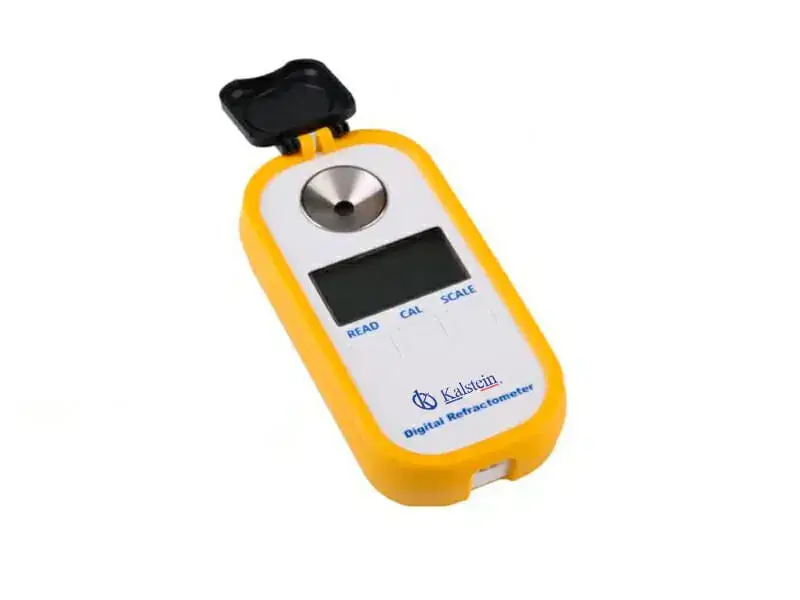
How to Ensure ISO/IEC Compliance with Digital BRIX+ Salinity Refractometers
In an era where quality assurance in laboratories is paramount, understanding how to meet ISO/IEC standards is essential. Digital BRIX+ Salinity Refractometers play a critical role in laboratories requiring precise measurements of soluble solids and salinity. This article will investigate various models in this category, focusing on their compliance capabilities with ISO/IEC regulations.
Overview of ISO/IEC Standards and Their Importance
ISO/IEC standards provide a framework for quality management systems, ensuring laboratories produce reliable and accurate results. Specifically, ISO 17025 is crucial as it outlines the requirements for the competence of testing and calibration laboratories. Compliance with these standards not only enhances credibility but also assures clients of the integrity of results.
How Digital BRIX+ Salinity Refractometers Meet ISO/IEC Regulations
Digital BRIX+ Salinity Refractometers like the YR05961 and YR05962 are designed with features that facilitate compliance with ISO/IEC standards. These instruments offer automatic temperature compensation (ATC), ensuring measurements remain accurate within a temperature range of 0 to 40°C, a requirement that aligns with ISO 17025 guidelines for environmental conditions.
Key ISO/IEC Clauses Addressed by Each Model
Different models address specific ISO/IEC clauses. For instance, the YR05961 model's ability to measure Brix and salinity precisely aligns with ISO 17025’s requirements for measurement traceability. Understanding how each model contributes to fulfilling these standards can help laboratories maintain compliance and improve operational excellence.
Comparison of Available Models
| Model | ISO/IEC Clauses Covered | Traceability Features | Best For |
|---|---|---|---|
| YR05961 | ISO 17025 | Calibration certificates available | Brix measurement |
| YR05962 | ISO 17025 | ATC for temperature corrections | Salinity measurement |
| YR05963 | ISO 17025 | Standardized scales | Salinity measurement |
| YR05964 | ISO 17025 | Traceable standards | Density measurement |
| YR05965 | ISO 17025 | Precision calibration | Refractive index measurement |
Common Mistakes and How to Avoid Them
A common mistake laboratories make is neglecting regular calibration of their refractometers. This oversight can lead to inaccurate readings, ultimately jeopardizing compliance with ISO/IEC standards. Additionally, failing to document measurement procedures can also result in non-compliance during audits. Ensure regular calibration and thorough documentation of all testing procedures to avoid these pitfalls.
Best Practices for Calibration and Maintenance
To maintain compliance with ISO/IEC standards, establish a routine calibration and maintenance schedule for each Digital BRIX+ Salinity Refractometer. Use traceable standards for calibration and document all results to maintain conformance to ISO 17025 requirements. This practice not only ensures accurate readings but also provides necessary evidence during compliance audits.
Case Study: Implementation in a Laboratory Setting
A laboratory that implemented the YR05962 model reported significant improvements in compliance with ISO/IEC standards. By utilizing this refractometer, they achieved precise salinity measurements, which led to enhanced product quality. Their rigorous adherence to calibration schedules resulted in a successful audit, showcasing the importance of using compliant instruments.
Frequently Asked Questions
How do Digital BRIX+ Salinity Refractometers ensure ISO compliance?
Digital BRIX+ Salinity Refractometers like the YR05961 utilize features such as automatic temperature compensation and standardized scales to ensure compliance with ISO standards, particularly ISO 17025.
What ISO/IEC standards do Digital BRIX+ Salinity Refractometers meet?
Models such as the YR05962 and YR05963 can help laboratories meet ISO 17025 by providing accurate measurements and traceability in compliance with testing requirements.
How often should I calibrate my Digital BRIX+ Salinity Refractometer?
For compliance with ISO standards, it is advisable to calibrate your Digital BRIX+ Salinity Refractometer, such as the YR05964, regularly—ideally before each use or at least once a month.
What documentation is needed for compliance audits using refractometers?
Documentation should include calibration records, measurement logs, and maintenance schedules for models like the YR05965 to demonstrate compliance with ISO/IEC standards during audits.
How can I improve measurement accuracy in my laboratory?
Using models like the YR05961 with automatic temperature compensation can significantly enhance measurement accuracy, thus supporting ISO compliance efforts.
What are the benefits of using standardized refractometers in laboratories?
Standardized refractometers such as the YR05962 ensure that measurements are traceable and compliant with ISO 17025, which enhances the credibility of laboratory results.
Why is traceability important in laboratory measurements?
Traceability ensures that measurements can be traced back to recognized standards, as provided by models like the YR05963, which is essential for ISO/IEC compliance.
How does environmental control impact compliance with ISO standards?
Environmental control is critical; maintaining conditions between 0-40°C, as supported by models like the YR05964, helps ensure that measurements remain accurate and compliant with ISO 17025.
If you are looking for a fusion of innovation and quality, you have come to the right place. At Kalstein, we offer you the luxury of exploring our exclusive catalog of laboratory equipment. We manufacture every device to the highest standards of excellence. Our intuitive and seamless online purchasing channels are designed for your convenience, securing the most competitive prices. Hesitate no longer — we bring science to life, it is time to become part of our community.