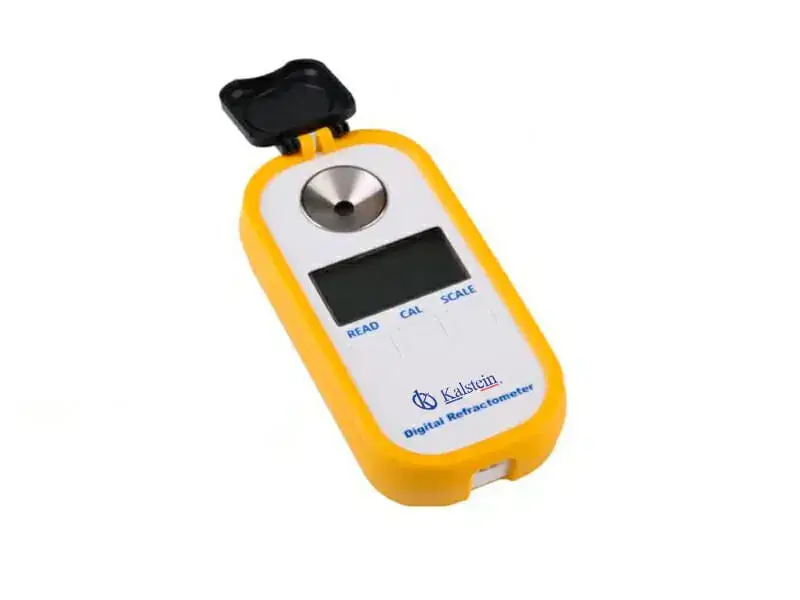
Maximizing ROI and Cost-Benefit Analysis for Digital BRIX Refractometers in Laboratories
Digital BRIX Refractometers play a crucial role in laboratories that analyze the concentration of soluble solids, particularly in food and beverage production. In this article, we explore how laboratory professionals can maximize their return on investment (ROI) and perform cost-benefit analysis for these devices. We will compare several models available in the market and discuss their specific applications, helping laboratories make informed decisions about their equipment purchases.
Understanding ROI in Laboratory Settings
Return on Investment (ROI) is a performance measure used to evaluate the efficiency or profitability of an investment. In the context of laboratory equipment such as Digital BRIX Refractometers, ROI can be calculated by comparing the gain or loss generated relative to the investment cost. Key factors that influence ROI include initial purchase cost, operational expenses, maintenance costs, and the impact on productivity and accuracy.
Cost-Benefit Analysis: Why It Matters
Cost-benefit analysis is a systematic approach to estimating the strengths and weaknesses of alternatives, helping laboratories decide which option provides the best approach to achieving benefits while minimizing costs. For Digital BRIX Refractometers, this involves evaluating not only the direct costs of the instruments but also their potential to enhance productivity, improve accuracy, and reduce waste in the long run.
Comparison of Available Models
| Model | Measurement Range | Price (USD) | Recommended Scenario |
|---|---|---|---|
| YR05944 | Brix: 0.0-50.0% | 76.00 | Fruit juice and syrup analysis |
| YR05945 | Brix: 0.0-90.0% | 95.00 | Beverage industry applications |
| YR05946 | Refractive Index: 1.3330-1.5177 | 95.00 | General laboratory usage |
| YR05947 | Dextran: 0.0-10.6% | 95.00 | Specialized sugar analysis |
| YR05948 | Fructose: 0.0-68.9% | 95.00 | Food processing laboratories |
| YR05949 | Glucose: 0.0-59.9% | 95.00 | Health and nutrition studies |
| YR05950 | Lactose: 0.0-1.0% | 95.00 | Dairy product analysis |
Key Considerations for Cost-Benefit Analysis
When performing a cost-benefit analysis for Digital BRIX Refractometers, several key factors should be taken into account:
- Initial Costs: Evaluate the purchase price of the instruments, which varies from model to model.
- Operating Costs: Consider factors such as calibration, maintenance, and any required consumables.
- Efficiency Gains: Assess how the refractometers can improve throughput and accuracy in testing.
- Long-Term Benefits: Factor in reductions in waste and rework, which can significantly improve profitability over time.
Calculating Potential ROI
To calculate the ROI for a Digital BRIX Refractometer, you can use the following formula:
ROI (%) = (Net Profit / Cost of Investment) x 100
For instance, if a laboratory spends $95 on the YR05945 model and subsequently identifies savings of $200 over a year from increased efficiency, the ROI would be approximately 110.5%.
Common Mistakes and How to Avoid Them
In conducting cost-benefit analyses, laboratories often make mistakes that can skew the results:
- Ignoring Indirect Costs: Always include all indirect costs associated with equipment use, including training.
- Overestimating Savings: Be conservative in estimating projected savings to avoid disappointment later.
- Failure to Reassess: Regularly review the performance of equipment to ensure it continues to meet cost-saving expectations.
Creating a Cost Matrix for BRIX Refractometers
| Model | Initial Investment (USD) | Annual Operating Costs (USD) | Projected Annual Savings (USD) | ROI (%) |
|---|---|---|---|---|
| YR05944 | 76.00 | 20.00 | 150.00 | 97.37 |
| YR05945 | 95.00 | 22.00 | 200.00 | 187.37 |
| YR05946 | 95.00 | 21.00 | 175.00 | 164.21 |
| YR05947 | 95.00 | 23.00 | 180.00 | 161.96 |
| YR05948 | 95.00 | 20.00 | 190.00 | 178.95 |
| YR05949 | 95.00 | 22.00 | 200.00 | 187.37 |
| YR05950 | 95.00 | 21.00 | 180.00 | 161.96 |
Frequently Asked Questions
What are the cost savings associated with using a Digital BRIX Refractometer in laboratories?
Using a Digital BRIX Refractometer like the YR05945 can lead to significant cost savings. These devices improve accuracy in testing, which may reduce the amount of waste and rework necessary, effectively saving laboratories money over time. The initial investment of $95 can be recouped through enhanced efficiency.
How can I calculate ROI for Digital BRIX Refractometers used in sugar analysis?
To calculate ROI for models like the YR05944, use the formula: ROI (%) = (Net Profit / Cost of Investment) x 100. If savings from improved testing accuracy exceed the investment cost of $76, the ROI can be substantial over the instrument's lifespan.
What is the typical payback period for Digital BRIX Refractometers in food laboratories?
The payback period for Digital BRIX Refractometers such as the YR05945 can be under one year if the annual savings from increased efficiency exceed the initial costs of around $95. Regular assessments can help ensure that the cost benefits are realized.
Which Digital BRIX Refractometer is best for fruit juice analysis?
The YR05944 model is optimal for fruit juice analysis with a measurement range of Brix 0.0-50.0%, making it ideal for laboratories focused on quality control in juice production.
How do Digital BRIX Refractometers reduce operational costs in laboratories?
Digital BRIX Refractometers, such as the YR05946, reduce operational costs by minimizing the error margin in concentration testing, thus lowering the need for retesting and wasted materials. Their precision leads to better resource allocation.
What features should I look for in a Digital BRIX Refractometer for cost efficiency?
When assessing cost efficiency, consider models with automatic temperature compensation (ATC) like the YR05944, which helps maintain accuracy without frequent recalibration, thus saving time and reducing operational expenses.
How can I ensure compliance with industry standards using a Digital BRIX Refractometer?
To ensure compliance, select models like the YR05945 that provide precise measurements and support industry-standard protocols. Regular calibration and maintenance schedules must also be adhered to maintain compliance.
What is the impact of Digital BRIX Refractometers on laboratory productivity?
Digital BRIX Refractometers, such as the YR05948, enhance productivity by providing quick and accurate results, enabling laboratories to process more samples per hour, hence improving overall output and efficiency.
If you are looking for a fusion of innovation and quality, you have come to the right place. At Kalstein, we offer you the luxury of exploring our exclusive catalog of laboratory equipment. We manufacture every device to the highest standards of excellence. Our intuitive and seamless online purchasing channels are designed for your convenience, securing the most competitive prices. Hesitate no longer — we bring science to life, it is time to become part of our community.