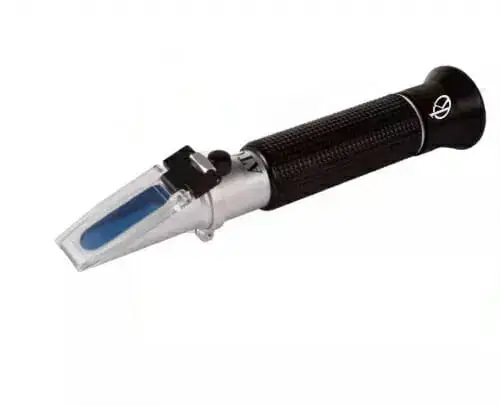
Essential Guide to Predictive Maintenance and Calibration for Brix Refractometers
Brix refractometers are vital tools for professionals in various fields such as viticulture, food production, and brewing. To ensure they deliver accurate results, it's essential to implement effective predictive maintenance and periodic calibration strategies. This guide delves into best practices, challenges, and models available to help you maintain your Brix refractometers effectively.
Understanding Predictive Maintenance and Calibration
Predictive maintenance involves monitoring the performance of equipment to anticipate failures before they occur. Calibration, on the other hand, is the process of adjusting the output or indication of a measuring instrument to correspond with the value of the standard reference. Together, these practices ensure that Brix refractometers provide reliable and precise measurements of sugar levels in various liquids.
Importance of Predictive Maintenance in Brix Refractometers
Implementing predictive maintenance can significantly enhance the reliability of Brix refractometers. This approach helps to identify potential issues early, reduces downtime, and prolongs the lifespan of the equipment. Regular monitoring can help ascertain the operational conditions affecting the refractometers, ensuring they perform at their best.
Calibration: A Critical Practice
Calibration is crucial for ensuring that Brix refractometers provide accurate measurements. Depending on their usage, calibration should be performed at recommended intervals, especially when the equipment is exposed to varying temperatures or conditions. Precision is critical, especially in applications like winemaking and food production, where even small inaccuracies can lead to significant quality issues.
Key Models of Brix Refractometers and Their Applications
This section will discuss the available models of Brix refractometers and how they align with the focus on predictive maintenance and calibration.
Brix Refractometers YR05872
The YR05872 model is ideal for testing Brix levels in liquids with a range from 0-5% Brix. Its optical measurement system ensures accuracy and reliability, making it perfect for growers needing precise sugar content. Regular calibration is recommended for this model to maintain its accuracy.
Brix Refractometers YR05873
This model measures Brix levels from 0-10%. It is commonly used by vegetable growers and food producers. Scheduled calibration is essential to ensure that readings remain accurate, especially after extended use.
Brix Refractometers YR05874
The YR05874 model provides a range of 0-18% Brix. It's particularly well-suited for brewers and food manufacturers. Predictive maintenance strategies can help avoid costly downtimes and ensure consistent quality in testing.
Brix Refractometers YR05875
This refractometer can measure up to 20% Brix, making it a versatile tool for various applications. Regular calibration helps ensure the accuracy of the measurements critical for product quality assurance.
Brix Refractometers YR05876
With a measurement range of 0-32% Brix, this model is perfect for professionals dealing with a wide variety of products. Predictive maintenance is particularly beneficial for this refractometer to avoid unexpected failures.
Brix Refractometers YR05877
The YR05877 offers flexibility in testing different Brix levels and is often used in agricultural settings. Calibration checks should be part of routine maintenance to uphold its performance.
Comparison of Available Models
| Model | Measurement Range | Minimum Division | Accuracy | Recommended Calibration Interval |
|---|---|---|---|---|
| YR05872 | 0-5% Brix | 0.1% Brix | ± 0.10% Brix | Every 6 months |
| YR05873 | 0-10% Brix | 0.1% Brix | ± 0.10% Brix | Every 6 months |
| YR05874 | 0-18% Brix | 0.1% Brix | ± 0.10% Brix | Every 6 months |
| YR05875 | 0-20% Brix | 0.1% Brix | ± 0.10% Brix | Every 6 months |
| YR05876 | 0-32% Brix | 0.1% Brix | ± 0.10% Brix | Every 6 months |
| YR05877 | Range varies | 0.1% Brix | ± 0.10% Brix | Every 6 months |
Common Mistakes and How to Avoid Them
When operating Brix refractometers, several common pitfalls may arise, impacting measurement accuracy. One mistake is neglecting regular calibration, which can lead to erroneous readings. Another issue is failing to maintain equipment properly, resulting in performance degradation. Laboratories should adopt a scheduled maintenance and calibration plan to avoid these errors.
Frequently Asked Questions
How often should Brix refractometers be calibrated for optimal accuracy?
Calibration of Brix refractometers should occur at least every 6 months to ensure optimal accuracy, especially for models like YR05872 and YR05876, which are sensitive to changes in temperature and use conditions.
What are the implications of not maintaining Brix refractometers regularly?
Not maintaining Brix refractometers regularly can result in inaccurate measurements, leading to poor product quality and significant economic losses. Models like YR05875 depend on precise calibration to ensure reliable results.
Which factors influence the calibration schedule for Brix refractometers?
Factors influencing the calibration schedule include usage frequency, environmental conditions, and the specific model in use. For example, YR05873 may require more frequent checks if used in varied temperatures.
What is the impact of temperature on Brix refractometer readings?
Temperature can significantly affect Brix refractometer readings, as these instruments are calibrated for specific temperature ranges. The YR05874 model, for instance, performs best at 10-30°C, so maintaining the environment is crucial for accuracy.
How can predictive maintenance extend the life of Brix refractometers?
Predictive maintenance identifies potential issues before they cause failures, thereby extending the life of Brix refractometers. Regular checks can keep models like YR05876 functioning optimally, reducing downtime and repair costs.
What are the key specifications to consider when selecting a Brix refractometer?
Key specifications include measurement range, minimum division, and accuracy. For instance, the YR05875 offers a 0-20% Brix range with an accuracy of ±0.10% Brix, suitable for various applications.
How do I ensure compliance with industry standards using Brix refractometers?
Compliance can be ensured by following calibration protocols and maintaining documentation of calibration routines. Utilizing models such as YR05877 with traceable calibration standards can aid in meeting regulatory requirements.
How can I request a quote for Brix refractometers at competitive prices?
You can request a quote for Brix refractometers directly from suppliers who specialize in laboratory equipment. This can help you secure competitive prices and ensure you get the right model to meet your needs.
If you are looking for a fusion of innovation and quality, you have come to the right place. At Kalstein, we offer you the luxury of exploring our exclusive catalog of laboratory equipment. We manufacture every device to the highest standards of excellence. Our intuitive and seamless online purchasing channels are designed for your convenience, securing the most competitive prices. Hesitate no longer — we bring science to life, it is time to become part of our community.