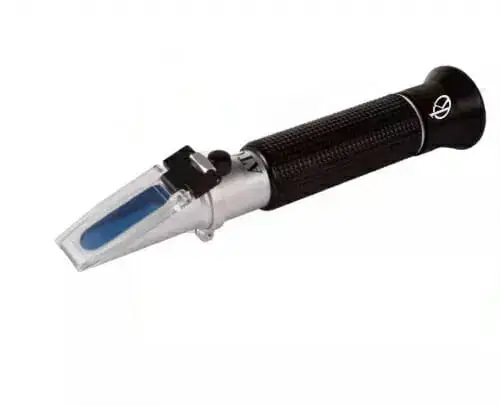
Understanding Predictive Maintenance and Recommended Calibration for Salinity Refractometers
Salinity refractometers are essential instruments in laboratories, particularly in marine research, aquaculture, and quality control in various industries. The accuracy of readings provided by these devices depends not only on their inherent design and technology but also on the implementation of effective predictive maintenance and regular calibration. This article delves into the significance of both practices, specifically focusing on models such as YR05887, YR05888, YR05913, and YR05914 from Kalstein, to ensure optimal performance and reliability.
The Role of Predictive Maintenance in Laboratory Equipment
Predictive maintenance is a proactive approach that leverages data analysis to predict when equipment will fail. For salinity refractometers, this means monitoring their performance over time to anticipate calibration needs and identify potential failures before they occur. By employing predictive maintenance, laboratories can minimize downtime and extend the operational life of their refractometers, ultimately leading to greater efficiency and cost savings.
Importance of Periodic Calibration for Accurate Measurements
Calibration is crucial for measuring instruments like salinity refractometers to ensure accuracy and reliability in data collection. Regular calibration against standard solutions is necessary to verify the instrument's performance and adjust for any drift in readings. For example, the YR05887 model, with its range of 0-100 ppt for NaCl levels, benefits significantly from consistent calibration practices. This ensures that the device provides precise measurements crucial for quality control and research applications.
Calibration Intervals and Recommendations
Establishing a calibration schedule is vital for maintaining the accuracy of salinity refractometers. It is generally recommended to calibrate these instruments at least once a month, or more frequently if they are subjected to rigorous use. Using solutions with known salinity levels, laboratories can perform calibration checks to verify the accuracy of models like YR05888, which operates within a range of 0-4% salinity (0-40 ppt).
Key Specifications and Performance of Kalstein Models
The choice of salinity refractometer can significantly impact the effectiveness of predictive maintenance and calibration routines. Here, we compare the key specifications of four models from Kalstein:
| Model Code | Description | Measurement Range | Precision | Material |
|---|---|---|---|---|
| YR05887 | Designed for testing saline concentrations and specific gravity. | Salinity: 2-4% (20-40ppt) | ±0.1% | Pure Aluminum |
| YR05888 | Ideal for low salinity testing with specific gravity measurement. | Salinity: 0-4% (0-40ppt) | ±0.1% | Pure Aluminum |
| YR05913 | Effective in marine applications for accurate salinity readings. | Salinity: 0-4% (0-40ppt) | ±0.1% | Pure Aluminum |
| YR05914 | Versatile model for both laboratory and field use. | Salinity: 2-4% (20-40ppt) | ±0.1% | Pure Aluminum |
Common Mistakes and How to Avoid Them
One of the most common mistakes laboratories make is overlooking the importance of regular calibration. Failing to calibrate salinity refractometers can lead to inaccurate measurements, compromising the quality of results and potentially causing significant issues in applications. Another mistake is ignoring environmental factors such as temperature fluctuations, which can affect readings. To avoid these issues, establish a strict calibration schedule and maintain stable operating conditions within the laboratory.
Comparison of Available Models
In the following table, we provide a comparison of the available models, focusing on their specifications and the best applications for each:
| Model Code | Measurement Capability | Best for | Calibration Frequency |
|---|---|---|---|
| YR05887 | Salinity: 2-4% (20-40ppt) | Marine research | Monthly |
| YR05888 | Salinity: 0-4% (0-40ppt) | Aquaculture | Monthly to Bi-weekly |
| YR05913 | Salinity: 0-4% (0-40ppt) | Laboratory quality control | Monthly |
| YR05914 | Salinity: 2-4% (20-40ppt) | Field usage | Monthly |
Frequently Asked Questions
How often should I calibrate my salinity refractometer for optimal performance?
It is recommended to calibrate your salinity refractometer, such as the YR05887, at least once a month. Regular calibration ensures accurate measurements, particularly for applications in marine research where precision is essential.
What is the best salinity refractometer for aquaculture applications?
The YR05888 is an excellent choice for aquaculture applications, providing measurements of salinity from 0-4% (0-40 ppt). Its calibration should be performed frequently to ensure reliability in monitoring water quality.
How does temperature affect the calibration of salinity refractometers?
Temperature can significantly impact the performance of salinity refractometers. For instance, the YR05913 has automatic temperature compensation (ATC), which adjusts readings based on temperature variations, ensuring accurate salinity measurements.
Why is predictive maintenance important for laboratory refractometers?
Predictive maintenance, when applied to refractometers like the YR05914, allows for proactive identification of calibration needs and potential failures, ultimately minimizing downtime and extending equipment lifespan.
What are the key specifications to consider when selecting a salinity refractometer?
Key specifications include measurement range, precision, and material used in construction. For example, the YR05887 model features a range of 2-4% salinity, crucial for marine research and quality control.
How can I ensure the accuracy of my salinity refractometer?
To ensure accuracy, perform regular calibrations using standard solutions and maintain the refractometer in stable environmental conditions. The YR05888 model is well-suited for achieving reliable readings when routinely calibrated.
What are the benefits of using automatic temperature compensation in refractometers?
Automatic temperature compensation helps maintain accurate readings despite temperature fluctuations. The YR05913 model incorporates this feature, ensuring precision in salinity measurements across various lab conditions.
How can I integrate predictive maintenance for my laboratory equipment?
Implementing predictive maintenance involves monitoring equipment performance, setting calibration schedules, and collecting data to predict failures. This approach can be applied to models like YR05914 to enhance their longevity and reliability.
For those looking to enhance their laboratory's efficiency and accuracy, exploring the right salinity refractometer is key. Request a quote on Kalstein Plus to find out more about our advanced models and their benefits.
If you are looking for a fusion of innovation and quality, you have come to the right place. At Kalstein, we offer you the luxury of exploring our exclusive catalog of laboratory equipment. We manufacture every device to the highest standards of excellence. Our intuitive and seamless online purchasing channels are designed for your convenience, securing the most competitive prices. Hesitate no longer — we bring science to life, it is time to become part of our community.