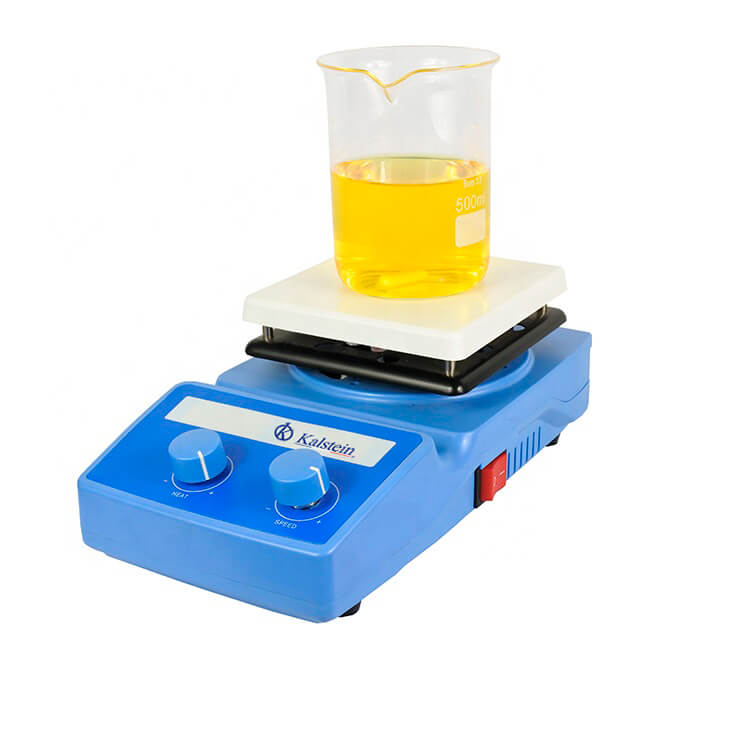
Understanding Return on Investment and Cost-Benefit Analysis for Laboratory Equipment
In the modern laboratory, maximizing the effectiveness of resources is essential for achieving optimal outcomes. Understanding return on investment (ROI) and conducting a cost-benefit analysis is crucial for laboratory managers when investing in equipment such as hotplate stirrers. This guide aims to delve into the intricate details of evaluating the ROI and cost-benefit for the Analog Ceramic top Hotplate Stirrer models available in the market.
Evaluating ROI and Cost-Benefit Analysis in Laboratories
Return on Investment (ROI) and cost-benefit analysis are two critical components that laboratory managers use to justify expenditures in equipment. ROI provides a metric that expresses the profitability of an investment, while cost-benefit analysis allows for a comprehensive evaluation of the financial viability of a purchase compared to the anticipated benefits.
In laboratory settings, the need for efficient equipment is paramount, particularly in processes like heating, stirring, and mixing solutions. Utilizing hotplate stirrers can significantly enhance workflow, reduce the time required for reactions, and maximize productivity. When analyzing the ROI of these devices, it is vital to consider both direct and indirect costs, as well as the benefits they provide.
Key Factors Influencing ROI
The ROI of laboratory equipment can be affected by several factors, including initial purchase price, operational costs, and lifespan of the equipment. For hotplate stirrers, parameters such as energy efficiency and maintenance needs play a vital role in determining long-term costs. Furthermore, assessing how quickly a piece of equipment can pay for itself through increased productivity is essential in making informed financial decisions.
Initial Investment and Operational Costs
The initial purchase price of hotplate stirrers varies among models, impacting the overall ROI. It is important to compare operational costs, such as energy consumption and maintenance requirements, to understand the total expenditure over time. For example, the Analog Ceramic top Hotplate Stirrer YR02933 has a price of $125, while YR02936 is priced at $265. When evaluating these investments, managers must consider how frequently the stirrers will be used and their roles in laboratory processes.
Productivity and Time Savings
Hotplate stirrers streamline laboratory workflows, allowing for more experiments and efficient use of time. The time saved during stirring and heating processes translates directly to increased output. For instance, the YR02935 model boasts a heating power of 750W, allowing rapid temperature adjustments, which ultimately shortens reaction times and improves throughput. Incorporating these gains into the ROI calculation is crucial for an accurate assessment.
Longevity and Maintenance
Equipment longevity significantly impacts ROI. High-quality models, such as the YR02934, are designed to withstand rigorous laboratory conditions, resulting in fewer breakdowns and lower maintenance costs. Understanding the lifespan and potential maintenance of hotplate stirrers aids laboratory managers in budget planning and forecasting future expenses, which ultimately improves the accuracy of the ROI assessment.
Comparison of Available Models
| Model | Initial Cost (USD) | Heating Power (W) | Best For |
|---|---|---|---|
| YR02933 | 125.00 | N/A | Basic stirring needs |
| YR02934 | 152.00 | N/A | Small-scale experiments |
| YR02935 | 190.00 | 750 | General laboratory use |
| YR02936 | 265.00 | 450 | Larger volume experiments |
Common Mistakes and How to Avoid Them
When evaluating ROI and cost-benefit analyses, laboratory managers often make common mistakes that can lead to poor investment decisions. Here are some pitfalls to avoid:
- Neglecting Hidden Costs: Many managers overlook factors such as energy usage and repair costs, which can affect the long-term value of equipment.
- Overestimating Benefits: It is crucial to remain realistic when estimating the benefits of new equipment to avoid inflated expectations.
- Ignoring the Full Lifecycle: Consideration of the entire lifecycle of the equipment, from purchase through disposal, is essential for accurate ROI calculations.
Frequently Asked Questions
What are the key benefits of using Analog Ceramic top Hotplate Stirrer in laboratories?
Using Analog Ceramic top Hotplate Stirrer, such as the YR02934, offers several benefits including efficiency in heating, versatility in stirring solutions, and ease of use. These models are designed to improve laboratory workflows by providing reliable temperature control and stirring capabilities.
How does the energy efficiency of different hotplate stirrers impact ROI?
The energy efficiency of hotplate stirrers directly impacts the ROI, as models like the YR02935 have higher heating power which can lead to reduced energy consumption over time, resulting in lower operational costs and improved return on investment.
What is the expected payback period for investing in a hotplate stirrer?
The payback period for investing in a hotplate stirrer, such as the YR02936, can vary based on usage and operational costs. Generally, if used efficiently, labs may expect payback within a few months due to increased productivity and reduced energy costs.
How do I determine the best model of hotplate stirrer for my laboratory needs?
To determine the best model of hotplate stirrer, consider factors such as the size of experiments, required heating power, and budget. Models like YR02935 offer versatility and efficiency for a wide range of applications, making them suitable for many laboratory environments.
What are the operational costs associated with hotplate stirrers?
Operational costs for hotplate stirrers include energy consumption, maintenance, and consumables. For instance, the YR02934 provides cost-effective heating solutions that can lead to significant savings in a laboratory setting.
How do maintenance requirements affect the ROI of laboratory equipment?
Maintenance requirements can significantly affect the ROI of laboratory equipment. Models like YR02936 are designed for durability, which reduces maintenance frequency and costs, ultimately improving the overall return on investment.
What is the significance of temperature control in hotplate stirrers for laboratory applications?
Accurate temperature control is crucial in laboratory applications to ensure consistent results. Models like YR02934 with PID automatic control provide precise temperature adjustments, enhancing the reliability of experimental outcomes.
How can I maximize the cost-benefit analysis for purchasing laboratory equipment?
To maximize the cost-benefit analysis, thoroughly evaluate the initial costs, operational expenses, productivity gains, and lifespan of the equipment. For example, the YR02935 offers features that enhance efficiency and could yield substantial savings over time, making it a wise investment.
If you are looking for a fusion of innovation and quality, you have come to the right place. At Kalstein, we offer you the luxury of exploring our exclusive catalog of laboratory equipment. We manufacture every device to the highest standards of excellence. Our intuitive and seamless online purchasing channels are designed for your convenience, securing the most competitive prices. Hesitate no longer — we bring science to life, it is time to become part of our community.