Salinity Refractometers: Common Mistakes and How to Avoid Them in Daily Operations 2026
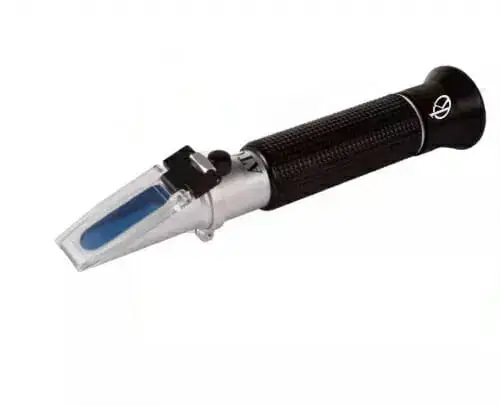
Salinity refractometers are essential instruments in various laboratory environments, especially in marine and clinical research. They allow professionals to measure the concentration of salt in water accurately. This article aims to provide laboratory professionals with a comprehensive guide on the applications, best practices, and common pitfalls associated with using salinity refractometers in 2026.
What is it used for in 2026
In 2026, salinity refractometers are primarily used in laboratories to determine the concentration of salt in water samples. Their applications span various fields, including:
- Marine Biology: Monitoring salinity levels in aquatic environments to ensure healthy ecosystems.
- Aquaculture: Managing salinity in fish farming to optimize growth conditions.
- Environmental Research: Assessing salinity levels in water bodies for ecological studies.
- Food Industry: Testing salinity in food products for quality control.
- Clinical Labs: Analyzing saline solutions used in medical applications.
History and evolution of the technology
The technology behind salinity refractometers has evolved significantly since their inception. Initially, handheld refractometers were primarily used in agriculture and chemical laboratories. Over time, advancements in optics and digital technology have led to the development of more accurate and user-friendly models. Today, many refractometers feature automatic temperature compensation and digital displays, improving ease of use and accuracy.
How to use it step by step
Using a salinity refractometer involves a straightforward process:
- Preparation: Ensure the refractometer is clean and calibrated. Use distilled water to calibrate if necessary.
- Sample Collection: Collect the water sample to be tested in a clean container.
- Applying the Sample: Place a few drops of the water sample onto the prism of the refractometer.
- Reading the Scale: Close the cover plate and look through the eyepiece to read the scale. Note the salinity or specific gravity measurement.
- Recording Results: Document the results for analysis and comparison.
Best techniques and protocols
To ensure accurate measurements, follow these best practices:
- Regularly calibrate the refractometer using known standards.
- Always clean the prism before and after use to prevent contamination.
- Ensure that samples are at room temperature for accurate readings.
- Use distilled water for calibration to avoid residual effects from other solutes.
Practical applications by laboratory type
Salinity refractometers are utilized in various laboratories with specific applications:
- Marine Research Laboratories: For studying ocean salinity and its effects on marine life.
- Clinical Laboratories: In testing saline solutions for medical applications.
- Food and Beverage Industry: Maintaining quality control standards for salt content in products.
- Aquaculture Facilities: Monitoring salinity for fish health and water quality management.
Regulations, standards and certifications
Laboratories utilizing salinity refractometers should adhere to relevant regulations and standards:
- ISO 9001 for quality management systems.
- ASTM standards for specific applications in testing.
- Compliance with local and international environmental regulations regarding water testing.
Comparison with alternative technologies
While salinity refractometers are widely used, alternative technologies include:
- Conductivity Meters: Measure the electrical conductivity of water to estimate salinity.
- Hydrometers: Measure the specific gravity of liquids but may not provide as precise salinity levels as refractometers.
Each technology has its advantages; however, refractometers are favored for their accuracy and ease of use.
Comparison of available models
| Model | Best for | Key specs | Recommended use case |
|---|---|---|---|
| YR05887 | Saltwater concentration testing | Salinity: 2-4% (20-40ppt) Specific Gravity: 1.015-1.030 | Laboratory quality control and marine research |
| YR05888 | Wide range salinity testing | Salinity: 0-4% (0-40ppt) Specific Gravity: 1.000-1.030 | Aquaculture and environmental assessments |
| YR05913 | Marine biology applications | Salinity: 2-4% (20-40ppt) Specific Gravity: 1.015-1.030 | Marine ecological studies |
| YR05914 | Quality control in food industry | Salinity: 0-4% (0-40ppt) Specific Gravity: 1.000-1.030 | Food production and quality standards testing |
Common mistakes and how to avoid them
Laboratory professionals often encounter several common mistakes when using salinity refractometers:
- Inaccurate Calibration: Failing to calibrate correctly can lead to erroneous readings. Always use standard solutions for calibration.
- Neglecting Temperature Effects: Not accounting for temperature variations can affect readings. Use models with automatic temperature compensation (ATC).
- Poor Sample Collection: Contaminating samples can lead to false readings. Always use clean, appropriate containers.
- Rushing the Process: Taking measurements too quickly can result in mistakes. Follow the step-by-step procedure for accuracy.
Maintenance, calibration and good practices 2026
For optimal performance of salinity refractometers, adhere to these maintenance and calibration practices:
- Regularly clean the prism with distilled water and a soft cloth.
- Calibrate before each use with standard solutions.
- Store in a protective case to avoid damage.
- Periodically check for signs of wear or malfunction.
Cost-benefit analysis 2026
When considering the investment in salinity refractometers, weigh the costs against the benefits:
- Initial Cost: Generally affordable, ranging from $9.50 and upwards based on features.
- Operational Benefits: High accuracy and ease of use may reduce time spent on testing.
- Long-Term Investment: Reliable equipment that provides consistent results can save costs associated with inaccuracies.
Frequently asked questions
What types of samples can I test with a salinity refractometer?
You can test various water samples, including seawater, brine, and saline solutions, depending on the refractometer model.
How often should I calibrate my salinity refractometer?
Calibrate your refractometer before each use or whenever you notice discrepancies in readings.
Can I use a salinity refractometer for other types of liquids?
While designed for water samples, some models may provide readings for other clear liquids; however, accuracy may vary.
How do I clean my salinity refractometer?
Clean the prism with distilled water and a soft cloth after each use to prevent contamination and ensure accurate measurements.
What should I do if my readings seem inaccurate?
Check for proper calibration, ensure the prism is clean, and make sure the sample is at the correct temperature for accurate readings.
Is it necessary to use distilled water for calibration?
Yes, using distilled water is essential for accurate calibration as it prevents any interference from other solutes.
How can I request a quote for a salinity refractometer?
You can request a quote through our online platform, where we provide detailed information on our product offerings.
If you are looking for a fusion of innovation and quality, you have come to the right place. At Kalstein, we offer you the luxury of exploring our exclusive catalog of laboratory equipment. We manufacture every device to the highest standards of excellence. Our intuitive and seamless online purchasing channels are designed for your convenience, securing the most competitive prices. Hesitate no longer — we bring science to life, it is time to become part of our community.