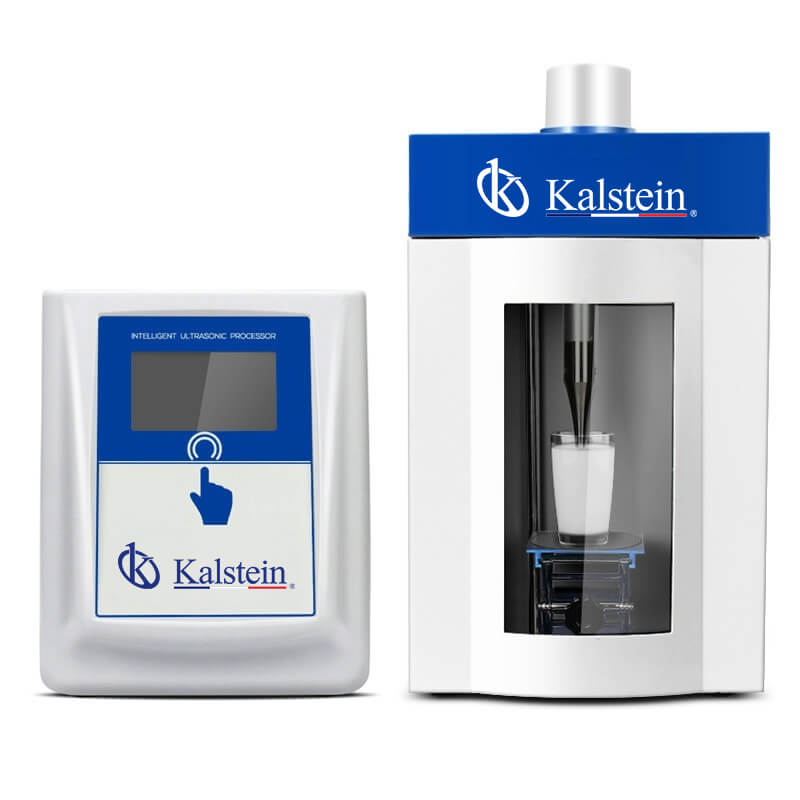
Understanding Measurement Interpretation with the YR05832 Ultrasonic Homogenizer
The YR05832 Ultrasonic Homogenizer is a versatile tool widely used in laboratory settings for liquid processing. This article aims to elucidate the interpretation of measurement results when using this specific model. Understanding how to read and analyze measurements is crucial for accurate scientific outcomes and efficient operational processes.
Principle of Operation
The YR05832 operates on the principle of ultrasonic cavitation. When ultrasonic waves propagate through a liquid, they generate alternating zones of high and low pressure, leading to the formation and collapse of microscopic bubbles. This cavitation effect produces shear forces that facilitate cell disruption, emulsification, and particle dispersion.
Key to this operation is the ultrasonic frequency range utilized, generally between 20-25 kHz for the YR05832, which is optimal for inducing effective cavitation without damaging the samples being processed. The choice of frequency is critical, as it directly influences the intensity and efficacy of cavitation, allowing for tailored applications in various scientific fields.
Measurement Interpretation and Common Parameters
When operating the YR05832, several key parameters must be monitored and interpreted correctly:
- Amplitude: The amplitude setting, adjustable between 1 and 99.9%, is crucial for controlling the energy output. Higher amplitudes typically result in more intense cavitation but can also lead to sample degradation.
- Power Output: The unit can vary its power output from 0 to 900 watts, allowing adaptation to different sample types and desired outcomes.
- Temperature Management: While the YR05832 does not have built-in temperature control for all models, monitoring the sample temperature is essential to prevent overheating during extended operations.
Understanding these parameters is vital for achieving consistent and reproducible results.
Technical Data Table for YR05832
| Model | Maximum Power (W) | Ultrasonic Frequency (kHz) | Included Probes | Power Supply (V) |
|---|---|---|---|---|
| YR05832 | 900 | 20-25 | 6, 10, 15, 22, 25 | 220/110 |
Common Mistakes in Measurement Interpretation
Operators often encounter issues when interpreting results from the YR05832. Here are common mistakes to avoid:
- Ignoring Calibration: Regular calibration of the device is essential for accuracy. Ensure that the YR05832 is calibrated according to the manufacturer's guidelines.
- Misreading Display Outputs: Familiarize yourself with the display readout format. Misinterpretation of units can lead to incorrect conclusions about sample concentrations or particle sizes.
- Inconsistent Sample Preparation: Variability in sample preparation can yield inconsistent results. Always ensure that samples are prepared uniformly for reliable comparisons.
Applications in Various Fields
The YR05832 is utilized in numerous fields, including:
- Clinical Labs: For breaking down cellular materials and emulsifying solutions for testing.
- Industrial Applications: In manufacturing processes for homogenizing liquids and dispersing particles.
- Educational Institutions: For teaching purposes in laboratories to demonstrate principles of cavitation and homogenization.
Each application has its unique parameters and considerations, further emphasizing the need for precise measurement interpretation.
FAQs
What are the key features of the YR05832 Ultrasonic Homogenizer?
The YR05832 Ultrasonic Homogenizer features a large touch screen for easy reading, a wide range of power adjustments, and a noise-reduction housing. It is also equipped with multiple probes suitable for different sample volumes.
How can I ensure accurate measurements with the YR05832?
To ensure accuracy, calibrate the device regularly, maintain consistent sample preparation, and understand the parameters displayed on the screen, including amplitude and power output.
What are the potential issues when using the YR05832?
Common issues include overheating, inconsistent results due to variability in sample preparation, and equipment malfunctions indicated by error codes. Regular maintenance and troubleshooting are essential to mitigate these problems.
How do I interpret the power settings on the YR05832?
Power settings on the YR05832 can be adjusted from 0 to 900 watts. Higher settings increase cavitation intensity but can potentially damage sensitive samples. Select power levels based on sample requirements and desired outcomes.
What types of samples can be processed with the YR05832?
The YR05832 can process a variety of samples, including biological cells, emulsions, and nanoparticles. It is adaptable to different sample sizes and types by changing the probes used.
Can the YR05832 be used for both small and large sample sizes?
Yes, the YR05832 is designed to accommodate a range of sample sizes by using different ultrasonic probes, allowing it to handle both small volumes in micro-scale applications and larger samples in industrial settings.
How can I request a quote for the YR05832?
You may request a quote for the YR05832 Ultrasonic Homogenizer through our customer service options, ensuring you get the best price available.
If you are looking for a fusion of innovation and quality, you have come to the right place. At Kalstein, we offer you the luxury of exploring our exclusive catalog of laboratory equipment. We manufacture every device to the highest standards of excellence. Our intuitive and seamless online purchasing channels are designed for your convenience, securing the most competitive prices. Hesitate no longer — we bring science to life, it is time to become part of our community.