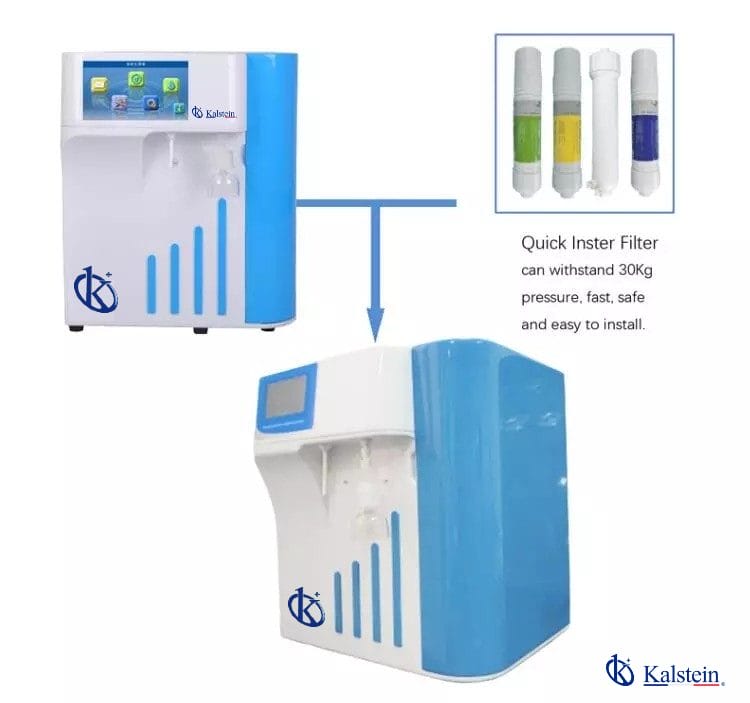
Understanding Measurement Interpretation: The YR56 Water Purification System
The YR56 Water Purification System is designed to deliver ultrapure water essential for various laboratory applications. Accurately interpreting the measurement results from this system is crucial for operators to ensure the highest quality outcomes. This article will provide a comprehensive examination of measurement interpretation, focusing on how to effectively read and analyze the results produced by the YR56.
Technical Specifications of the YR56
| Model | YR56 | YR56-1 |
|---|---|---|
| Water Source Input | RO Water or Purified Water | |
| Water Flow Rate | 1-1.5 L/min | |
| Machine Capacity | 60-90 L/H | |
| Output Water Quality | DI Water: Conductivity < 0.1 μS/cm (Type II ASTM) | UP Water: Resistivity 18.25 MΩ.cm @ 25°C (Type I ASTM); TOC: < 3 ppb, Particles (>0.22 µm) < 1/ml, Microorganisms < 1 CFU/ml |
| Pyrogens | N/A | < 0.001 EU/ml |
Principles of Operation and Measurement Interpretation
The YR56 operates through a combination of advanced purification technologies including ion exchange, reverse osmosis, and distillation. These methods work in series to minimize the concentration of organic and inorganic substances in the feed water.
Understanding how these purification processes affect measurement readings is critical. For example, conductivity is a primary indicator of water purity. As the water passes through the reverse osmosis membranes, the remaining ions are significantly reduced, leading to lower conductivity readings. Operators should be aware of how to interpret these readings accurately, as variations can indicate potential issues with the purification process.
Common Measurement Units and Their Interpretation
The YR56 outputs measurements in various units that are essential for assessing water quality:
- Conductivity: Measured in microsiemens per centimeter (μS/cm), it indicates the ion concentration in the water.
- Resistivity: Measured in megohm-centimeter (MΩ·cm), it quantifies the water's resistance to electrical flow, indicating purity levels.
- Total Organic Carbon (TOC): Measured in parts per billion (ppb), it reflects the presence of organic compounds.
Operators must familiarize themselves with these units and the expected normal ranges for the YR56 to ensure accurate assessments of water quality.
Interpreting Results from the YR56 Water Purification System
Accurate interpretation of results requires operators to understand the normal thresholds for various measurements:
- Conductivity: A reading of less than 0.1 μS/cm is ideal for DI water.
- Resistivity: A resistivity of 18.25 MΩ·cm at 25°C indicates high water quality.
- TOC Levels: A TOC reading below 3 ppb is essential for many laboratory applications.
Operators should regularly calibrate their measuring instruments and validate the readings against these benchmarks to ensure compliance with laboratory standards.
Common Misinterpretations of Measurement Readings
Incorrect interpretation of readings can lead to significant errors in laboratory operations. Some common misconceptions include:
- Assuming that low conductivity always means high purity without considering the specific type of purification method used.
- Overlooking the importance of resistivity as a decisive factor for ultrapure water quality.
- Misunderstanding how temperature can affect conductivity and resistivity readings.
By understanding these potential pitfalls, operators can avoid costly mistakes in their measurements and ensure the integrity of their laboratory results.
Best Practices for Reading and Recording Measurements
To maintain accuracy in measurement readings, the following best practices should be adopted:
- Regular calibration of measurement instruments used in conjunction with the YR56.
- Documentation of readings over time to track trends and variations.
- Cross-referencing results with standard operating procedures and established thresholds.
By adhering to these practices, operators can ensure they are making informed decisions based on accurate data.
Frequently Asked Questions
How do I interpret the conductivity readings from the YR56?
Conductivity readings from the YR56 should ideally be below 0.1 μS/cm for DI water. This low reading indicates effective ion removal during the purification process, ensuring high water purity.
What causes fluctuations in resistivity readings?
Fluctuations in resistivity readings can result from changes in water temperature, improper calibration of measurement devices, or contamination of the water source. Regular maintenance and calibration can help mitigate these issues.
Why is TOC measurement important in the context of the YR56?
Total Organic Carbon (TOC) measurements are critical because they indicate the presence of organic compounds in the purified water. Maintaining TOC levels below 3 ppb is necessary for many sensitive laboratory procedures.
How often should I perform maintenance on the YR56?
Regular maintenance on the YR56 is recommended to ensure optimal performance. Maintenance schedules should adhere to manufacturer guidelines and include inspection of filters, calibration of measurement devices, and verification of output water quality.
What is the impact of temperature on measurement accuracy?
Temperature can significantly affect both conductivity and resistivity readings. Operators must take temperature into account when interpreting results, as higher temperatures typically lower resistivity and increase conductivity readings.
Can I use the YR56 for different types of water sources?
Yes, the YR56 is compatible with various water sources, including RO water and other purified water. However, the choice of source will affect the purification efficiency and, consequently, the measurement outcomes.
Where can I request a quote for the YR56 Water Purification System?
To request a quote for the YR56 Water Purification System, please reach out through our dedicated channels for personalized assistance.
If you are looking for a fusion of innovation and quality, you have come to the right place. At Kalstein, we offer you the luxury of exploring our exclusive catalog of laboratory equipment. We manufacture every device to the highest standards of excellence. Our intuitive and seamless online purchasing channels are designed for your convenience, securing the most competitive prices. Hesitate no longer — we bring science to life, it is time to become part of our community.