Optical Surgical Navigation
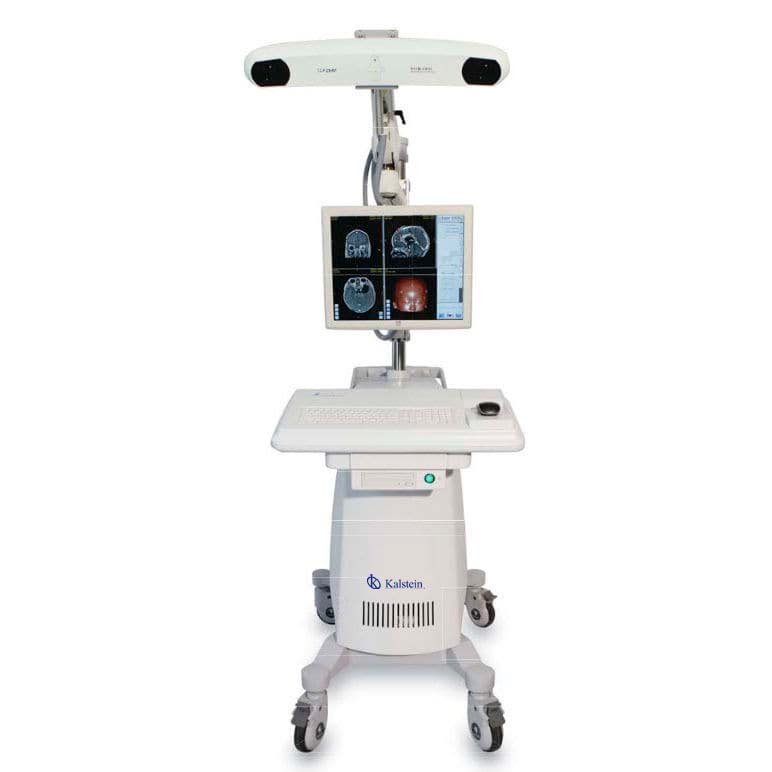
Optical surgical navigation is revolutionizing surgical procedures by enhancing precision and reducing risks. These systems utilize advanced technology to provide real-time imaging and tracking, making them invaluable in complex surgeries.
Investing in optical surgical navigation not only improves patient outcomes but also optimizes the efficiency of surgical teams. Understanding the features and factors influencing your choice will ensure you make an informed decision.
What you should know before selecting a optical surgical navigation and making an investment
Key factors to consider
When selecting an optical surgical navigation system, consider the technology it employs, such as electromagnetic or optical tracking. The ease of integration with existing surgical instruments and software is also crucial for seamless operation.
Evaluate the user interface and ensure it is intuitive for surgical teams, as this can significantly impact the overall workflow during procedures.
Market price range
The market for optical surgical navigation systems varies significantly in price based on features, brand reputation, and technology. Generally, prices can range from tens of thousands to over a hundred thousand dollars.
It’s vital to compare different models and their capabilities to ensure you are getting the best value for your investment in this critical equipment.
Value for money
Investing in a high-quality optical surgical navigation system can yield significant returns in terms of improved surgical outcomes and reduced operation times. Evaluate the long-term benefits against the initial costs to assess the overall value.
Look for systems that offer comprehensive support, training, and warranty services, as these can enhance your return on investment over time.
Expected lifespan based on use and maintenance
The lifespan of optical surgical navigation systems often depends on usage frequency and maintenance practices. Regular servicing and software updates can significantly extend the life of the equipment.
Investing in a robust maintenance plan can prevent costly repairs and ensure that your system remains accurate and reliable throughout its operational life.
OPTICAL SURGICAL NAVIGATION KALSTEIN
Discover optical surgical navigation for your laboratory
Explore our range of optical surgical navigation systems designed to enhance surgical precision and efficiency. Our featured product, the Surgical Navigation Systems YR02143, exemplifies cutting-edge technology that meets the demands of modern surgical environments.
Surgical Navigation Systems YR02143
The Surgical Navigation Systems YR02143 is a cutting-edge computer-aided electromagnetic navigation system, renowned for its application in surgical v
View productOur best-selling optical surgical navigation
Surgical Navigation Systems YR02143
Market Pricing
The pricing for the YR02143 Surgical Navigation System generally varies based on specific configurations and integrated technologies. In the current market, systems of this caliber can range from $100,000 to $200,000, depending on additional features such as software modules and calibration tools. For precise pricing tailored to your specific needs, we encourage you to generate a quote using our Kalstein Plus platform.Frequently Asked Questions
Q: What types of surgeries can the YR02143 be used for? A: The YR02143 is suitable for all ENT and neurological surgeries, particularly beneficial for deep intracranial lesions, low volume intracranial lesions, and minimally invasive surgeries. Q: What imaging modalities are supported? A: It supports DICOM images captured with CT, C-arm, MRI, and fMRI scanners, providing great flexibility and versatility. Q: How does the system handle unexpected power outages? A: The system is designed to automatically save all patient image data and registration information, allowing continuance of the navigation process, thereby minimizing downtime and maintaining surgical momentum.Advantages and Disadvantages
The YR02143 Navigation System offers significant advantages, including high precision, real-time 3D tracking, and surgical convenience through advanced simulation technologies. However, the initial investment can be a consideration for smaller facilities, and training may be required to fully utilize all features.Product Use in the Field
In practical scenarios, the YR02143 is utilized by placing markers on surgical tools, which are tracked throughout the procedure to ensure accurate navigation and lesion identification. This system supports a range of surgical environments, including operating rooms where complex cranial surgeries are performed.Recommendations
To maximize the performance of the YR02143, it is advisable to regularly calibrate the optical and electromagnetic components and ensure all software updates are promptly installed. Encouraging thorough training sessions for surgical staff will enhance the utilization and efficacy of the system.Key Features
- Real-time 3D optical tracking system - Compatible with multiple imaging modalities in DICOM format - Four distinct navigation modes for process oversight - Intelligent calibration software for anatomical changes - Mobile usage with touch monitor or surgeon mouseTechnical Specifications
| Model | YR02143 | ||
| Component | Amount | Description | |
| Optical tracking system | |||
| NDI tracking system | 1 set | Track 3D position and orientation of active or passive markers attached to surgical tools | |
| Image management workstation | |||
| Computer system | 1 set | For 2D image fusion and 3D reconstruction, navigation system | |
| Touch monitor | 1 piece | 19 *, 1280 x 1024 resolution, medical and healthcare grade | |
| Software package | 1 set | Core set (image fusion, surgical planning and navigation, data management) | |
| Software version 1 | 1 piece | Diffusion-tensor-images navigation module | |
| Software version 2 | 1 piece | Needle-Aspiration-Biospy navigation module | |
| Mobile car | |||
| Support trolley with 4 wheels | 1 piece | To support the optical tracking system and image management workstation | |
| Surgical tools | |||
| Navigation probe | 2 pieces | To help the optical measurement system track movement | |
| Microscope probe | 1 piece | To help the optical measurement system track movement | |
| Active marker | 6 pieces | To help quickly recognize critical anatomical structures. | |
| Passive reflective sphere | 10 pieces | To reflect the infrared laser for cameras (in the optical tracking system) to capture | |
| Framework | 2 pieces | To locate passive reflective sphere with 4 pins | |
| Articulated arm | 1 piece | To hold the frame of reference | |
| Clamp adapter | 2 pieces | For the adaptation of another instrument (such as the brain needle during navigation) | |
| Foot-swicht | 1 piece | To help register and navigate | |
| Touchmonitor specification | |||
| Case / bezel color | Beige | Mini VGA D-sub 15-pin; DVI-D | Mini VGA D-sub 15-pin; DVI-D |
Display | Sixe: 19.0 ”diagonal, active matrix TFT | Horizontal: 31.5-80 kHz | Horizontal: 31.5-80 kHz |
| Aspect ratio: 5; 4 | Vertical: 56.3-75 Hz | Vertical: 56.3-75 Hz | |
Useful display area | Horizontal: 14.82 "(376.32 mm) | Type: 100-240 VAC, 50-60 Hz | Type: 100-240 VAC, 50-60 Hz |
| Vertical: 11.85 "(301.06 mm) | Internal DC input power supply | Internal DC input power supply | |
Monitor dimensions | Width: 429mm (16.9 ") | DC input voltage (line): 12V 3.6V | DC input voltage (line): 12V 3.6V |
| Height (including stand): 15.21 "(386 mm) | 48 W max. | 48 W max. | |
| Depth (inc. Base) | Operating; 0 ° C to 40 ° C | Operating; 0 ° C to 40 ° C | |
| Native resolution (optional) | 1280 x 1024 @ 60/70/75 Hz | Storage: -20 ° C to 60 ° C | Storage: -20 ° C to 60 ° C |
| Other supported resolutions | 1280 x 960 / 1,024 x 768 in Hz | Operating: 20% -80% | Operating: 20% -80% |
| Colors | 16.7 million | Storage: 10% -90% | Storage: 10% -90% |
Brightness | LCD panel: 300 cd / m2 | Actual: 17.66 lbs. (8 kg) | Actual: 17.66 lbs. (8 kg) |
| With AccuTouch: 246 cd / m2 | Shipping: 25.10 lbs (11.84) | Shipping: 25.10 lbs (11.84) | |
| With IntellTouch: 276 cd / m2 | 3 years | 3 years | |
| Response time | 20 msec (typical) | Typical 40,000 hours at half brightness | Typical 40,000 hours at half brightness |
| Vision angle | Horizontal (left / right): 89 ° / 89 ° | MTBF; 50,000 hours demonstrated | MTBF; 50,000 hours demonstrated |
| (Typical, from the center) | Vertical (up / down): 89 ° / 89 ° | UL, Cul, fcc, ic, ce, China RoHS, Argentina S mark | UL, Cul, fcc, ic, ce, China RoHS, Argentina S mark |
| Contrast ratio | 1300: 1 (typical) | Two watt / channel speakers located in the display head | Two watt / channel speakers located in the display head |
| Input video format | Analog: (no video card needed) | OSD locks for user and power controls | OSD locks for user and power controls |
Input sync format | Separate horizontal and vertical | OSD extras include volume, treble, bass, balance | OSD extras include volume, treble, bass, balance |
| Synchronization, compound synchronization and | OSD Language (English, Chinese, Spanish, French) | OSD Language (English, Chinese, Spanish, French) | |
| Synchronization in green | Safety lock receptacle | Safety lock receptacle | |
Detailed analysis of optical surgical navigation for an effective and safe choice
Discover the Cutting-edge Optical Surgical Navigation Systems: A Comprehensive Guide
Optical Surgical Navigation, Brand Kalstein As a pioneer in medical technology, Kalstein excels in providing top-tier optical surgical navigation systems. These devices are crucial in elevating the precision of surgical procedures, facilitating enhanced visualization for surgeons. The reputation of Kalstein’s surgical devices stems from their commitment to innovative design and quality, which ensu
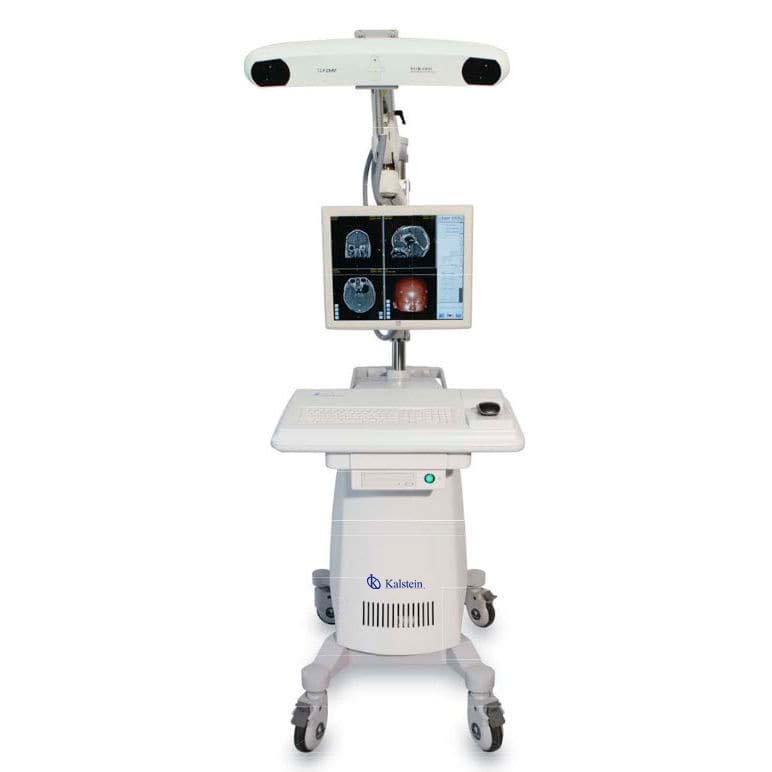
Why is an optical surgical navigation system important in the O.R.?
Through technological advances in medicine, it allows health experts to reach levels of precision and safety using optical surgical navigation systems within the operating field, which are extended and assisted by computer, magnifying images, facilitating diagnosis, planning and execution of procedures.
What is the optical surgical navigation function?
Computer-assisted surgery are methods of computer technology for the realization and planning of a surgical intervention. Optical surgical navigation is considered, the passage of computer surgery as a traditional basic element resulting in touch control, stereoscopic vision, manual dexterity and complete visual control of the surgical field.
Surgical navigation systems optics and cancer
According to the functions of the optical surgical navigation, it allows the detection of cancer in patients, also decreases the arrival times to the specialist of the patient, by means of guidance to identify and overcome the barriers that face and prevent early detection, as well as adequate and timely diagnosis and treatment of the disease. In addition, health experts achieve levels of accuracy and security in image acquisition, which are extended and assisted by computer, magnifying images, facilitating diagnosis, planning and execution of procedures.
optical surgical navigation offer catalog
Guides about optical surgical navigation
Complete guides to choose optical surgical navigation
What are the benefits of optical surgical navigation systems?
Through the use of optical surgical navigation systems, it allows the development of surgeries by means of real augmented technological simulation, which is characterized by sensory perception, adding visual content, as help guides to make
Leer másWhat is an optical surgical navigation system?
A surgical navigation system is a device that helps the planning and execution of surgical procedures in operating rooms, that is, it allows guiding surgical instruments such as the scalpel. It consists of instruments that are connected to
Leer másWhat are the parts of a surgical navigation system?
A surgical navigation system is an image-guided intraoperative location system, whose main function is to provide the surgeon with a real-time feedback of the location of the surgical instruments in relation to the anatomy of the patient. T
Leer másCharacteristics of a surgical navigation system
A surgical navigation system is a medical equipment that allows visualizing the anatomy of the patient during a surgical procedure and accurately tracking the location of the surgical instruments used. The use of these equipment during diff
Leer másFrequently asked questions about Optical Surgical Navigation
How to know the prices of Optical Surgical Navigation?
To know the price of Optical Surgical Navigation, please send us an email with your request through the contact form AQUI.
What are the delivery times for Optical Surgical Navigation?
Delivery time depends on stock availability and freight type (air or sea). In stock: air 15-30 days, sea 45-60 days. Out of stock: air 30-60 days, sea 60-90 days.
How to make a purchase of Optical Surgical Navigation?
You can buy by email ([email protected]), phone (+33 (0) 1 70 39 26 50) or through the official Kalstein website in your country.
How does the warranty work for Optical Surgical Navigation?
All Kalstein equipment comes with a 1-year warranty against manufacturing defects. The warranty does not cover damage from improper installation or misuse. See our «terms and conditions» AQUI.
Can I request a quote online for Optical Surgical Navigation?
Yes, you can request a quote for the Kalstein equipment you are interested in directly from our official website. Click AQUI.