
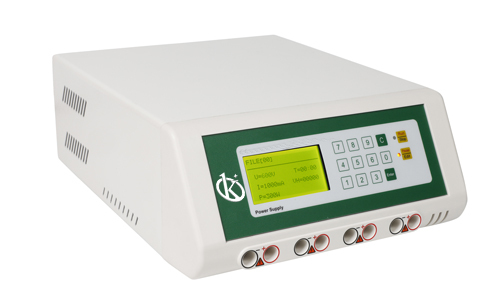
High Voltage Power Supplies are critical components for various scientific and industrial applications that demand precise control over voltage levels. In this article, we are comparing two notable products in the field: the High-Voltage Power Supply YR03409 by Kalstein and the High Voltage Power Supply PS350 by Stanford Research Systems. Both of these power supplies offer unique features that cater to the needs of specialized equipment, but subtle differences can impact your choice significantly.
The High-Voltage Power Supply YR03409 by Kalstein is designed to ensure a perfect blend of efficiency and robustness. This model boasts an advanced digital display for precise voltage measurements and is equipped with over-voltage and over-current protection systems, making it extremely reliable in demanding conditions. Meanwhile, the High Voltage Power Supply PS350 by Stanford Research Systems offers a highly respected alternative with a traditional analog interface that provides basic functionality. However, when it comes to innovation and comprehensive safety features, the YR03409 subtly outshines its competition.
| Feature | Kalstein YR03409 | Stanford PS350 |
|---|---|---|
| Voltage Range | 0 – 30kV | 0 – 5kV |
| Current Range | 0 – 10mA | 0 – 5mA |
| Display | Digital | Analog |
| Protection Features | Over-voltage, over-current | Basic |
How They Work
The functionality of these high voltage power supplies is focused on delivering a steady and adjustable power output to support various technical applications. The Kalstein YR03409 utilizes a sophisticated digital control system that allows precise adjustment of voltage and current, ensuring optimal performance and safety. This control system also facilitates automation, making it highly effective for modern laboratory setups.
Conversely, the Stanford PS350 operates through a more conventional approach, employing an analog interface that is straightforward but lacks the advanced control mechanisms present in the Kalstein model. It relies on manual adjustments which can be less precise and harder to automate in complex systems.
Applications
Both the Kalstein YR03409 and the Stanford PS350 serve crucial roles in ensuring the effective operation of devices requiring high voltage inputs. Common applications include powering electron microscopes, mass spectrometers, and various research tools. The ability to control high voltage precisely makes these devices indispensable in laboratories and industry alike.
Types
These power supplies are typically classified based on their control interface and protection mechanisms. Digital power supplies like the Kalstein YR03409 are preferred for applications requiring precise control and advanced features. Analog supplies, such as those offered by Stanford, are suitable for straightforward applications where budget constraints are significant, and precision is less critical.
Market Pricing
Pricing for high voltage power supplies can vary considerably based on features and brand reputation. The Kalstein High-Voltage Power Supply YR03409 tends to be competitively priced around $2,500, offering high-end features at a reasonable cost. On the other hand, the Stanford PS350 usually ranges between $1,800 and $2,200, reflecting its more basic design and capabilities.
Frequently Asked Questions
What are the safety features of these power supplies?
The Kalstein YR03409 includes advanced over-voltage and over-current protection, ensuring safe operation under various conditions. The Stanford PS350 includes basic safety features but lacks the advanced protections available in the Kalstein model.
Are these power supplies suitable for automated systems?
The digital interface of the Kalstein YR03409 makes it highly suitable for integration into automated systems. The Stanford PS350, with its analog design, may require additional components for automation.
Can these power supplies be used in a DIY project?
While technically possible, these power supplies are designed for professional and laboratory use, where precise control and safety are vital. We recommend professional supervision if used in non-commercial projects.
Advantages and Disadvantages
Kalstein YR03409: The major advantages include precise digital control, comprehensive safety features, and robust design. It excels in offering advanced functionality that ensures reliability and ease of use in complex laboratory environments. A potential disadvantage could be its price, slightly higher than analog counterparts but justified by its advanced capabilities.
Stanford PS350: This model provides a more budget-friendly option with essential features. However, it is limited by its analog controls, which may not offer the precision or safety needed for high-demand applications.
Field Usage
In practical scenarios, the Kalstein YR03409’s digital precision enhances user confidence, allowing for meticulous calibrations in laboratory settings. Its safety features reduce risks in case of unexpected high loads. The Stanford PS350, while reliable, may require more manual adjustments, which can introduce variability and potential errors in sensitive experiments.
Recommendations
To maximize the use of your high voltage power supply, ensure regular maintenance checks and calibration. For the Kalstein YR03409, take advantage of its digital interface for enhanced monitoring and data logging. This can streamline processes and improve the accuracy of your results. Always adhere to safety guidelines to prevent accidental harm from high voltage exposure.
If you’re looking for a fusion of innovation and quality, you’ve come to the right place. At Kalstein, we offer the luxury of exploring our exclusive catalog of laboratory equipment. We manufacture each piece of equipment with a level of excellence. Our intuitive and agile online purchasing channels are designed for your convenience, ensuring the friendliest prices. Don’t hesitate any longer, we bring science to life, it’s time to become part of our community. https://kalstein.co.nz/product/high-voltage-power-supply-yr03409/.