Rotary Evaporator
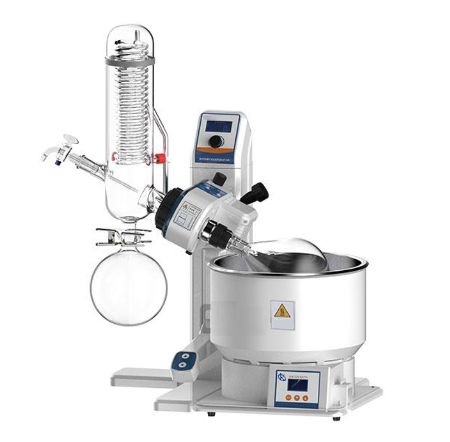
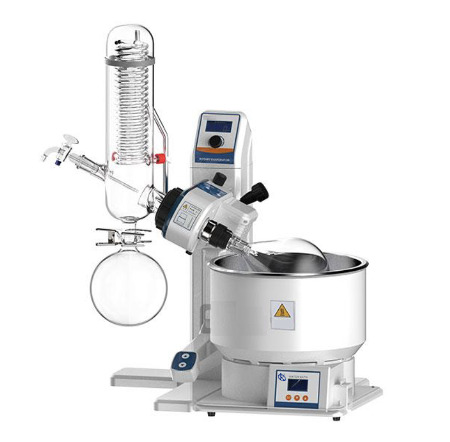
The rotary evaporator is a vital instrument in laboratories, particularly for the efficient removal of solvents through evaporation. It utilizes a rotating flask that applies heat and reduces pressure, allowing for rapid and gentle solvent evaporation.
These devices are essential for various applications, including distillation and concentration of solutions, making them indispensable in chemical, pharmaceutical, and academic research settings.
Types of rotary evaporator your laboratory may need
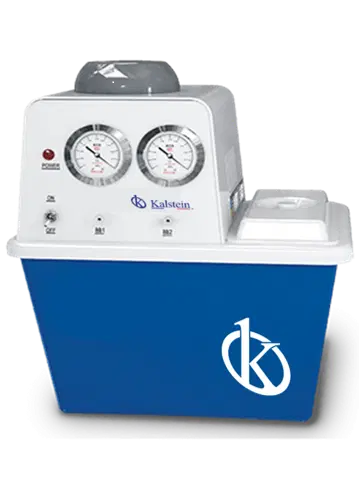
Vacuum Pump
A vacuum pump is crucial for enhancing the efficiency of rotary evaporators. It creates a vacuum environment that lowers the boiling point of solvents, thus facilitating faster evaporation without excessive heating that could degrade sensitive compounds.
Choosing the right vacuum pump is essential for achieving optimal performance, ensuring that the evaporation process is efficient and safe for all substances involved.
What you should know before selecting a rotary evaporator and making an investment
Key factors to consider
When selecting a rotary evaporator, consider the volume and type of materials you will be working with. The size of the evaporating flask and the heating capabilities should match your workflow needs for optimal efficiency.
Look for features such as temperature control, vacuum capabilities, and ease of use to ensure that the device meets your laboratory's specific requirements.
Market price range
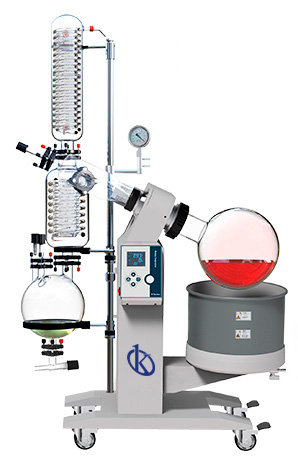
The price of rotary evaporators can vary significantly based on their features and capabilities. Entry-level models may start around a few hundred dollars, while high-end units can cost several thousand.
It's essential to assess your laboratory budget against the long-term benefits and efficiency gains that a quality rotary evaporator can provide.
Value for money
Investing in a rotary evaporator should be viewed through the lens of value for money. Consider the durability, warranty, and customer support offered by the manufacturer, as these factors can greatly influence the overall cost-effectiveness of your purchase.
Choosing a reputable brand with good reviews may save you from future costs associated with repairs or replacements.
Expected lifespan based on use and maintenance
The lifespan of a rotary evaporator can vary based on how frequently it is used and how well it is maintained. Regular cleaning and proper handling can extend the life of the equipment, ensuring reliable performance over time.
Evaluate the maintenance requirements and expected lifespan when making your decision to ensure that your investment is sustainable in the long run.
ROTARY EVAPORATOR KALSTEIN
Discover rotary evaporator for your laboratory
Our rotary evaporators are designed to meet the diverse needs of laboratories, providing innovative solutions for efficient evaporation and distillation processes. Explore our range to find the perfect match for your laboratory's requirements.
Rotary Evaporator YR02306
The Rotary Evaporator YR02306 is an indispensable tool for laboratories focusing on the evaporation, distillation, and separation of chemicals. This s
View productRotary Evaporator YR02307 // YR02310
The Rotary Evaporator YR02307 // YR02310 is designed with a large capacity and wide opening of the evaporating flask, providing an extensive evaporati
View productOur best-selling rotary evaporator
Rotary Evaporator YR02307 // YR02310
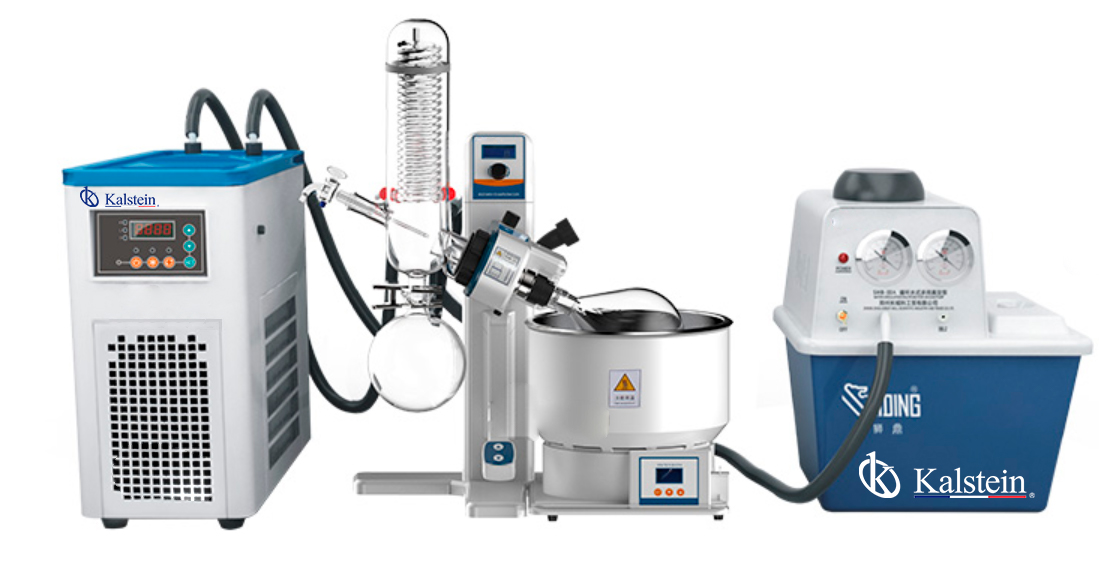
The Rotary Evaporator YR02307 // YR02310 is designed with a large capacity and wide opening of the evaporating flask, providing an extensive evaporation surface. As the flask rotates and is consistently heated by its water bath, the system ensures efficient solvent evaporation under vacuum conditions. Ideal for pilot-scale production, this equipment is pivotal in biological engineering, the pharmaceutical and chemical industries, as well as food processing. Typically, it integrates seamlessly with complementary devices such as water circulating vacuum pumps, diaphragm vacuum pumps, recirculating chillers, constant temperature circulators, and low-temperature circulating pumps.
Market Price
Considering similar products in the market, the Rotary Evaporator YR02307 // YR02310 is competitively priced. The average market range for such advanced rotary evaporators typically spans from $11,000 to $11,900 USD, reflecting the balance of innovation, reliability, and robust performance offered by this equipment.
Frequently Asked Questions
What is the main application of the Rotary Evaporator YR02307 // YR02310?
This rotary evaporator is primarily used for efficient and gentle removal of solvents from samples by evaporation, making it ideal for use in laboratories for chemistry, biology, and pharmaceuticals.
Is this evaporator equipped with safety features?
Yes, it includes a water bath jacket that protects operators from scalding hazards associated with hot liquids.
Advantages and Disadvantages
The Rotary Evaporator YR02307 // YR02310 boasts several advantages, including patented double sealing technology ensuring optimal vacuum conditions, and a corrosion-resistant Teflon discharge valve. However, users should consider the initial investment cost and ensure compatibility with their existing laboratory systems.
Usage in the Field
This equipment excels in research and production settings, enabling users to efficiently distill solvents and compound extractions in large volumes. It is tailored for laboratories conducting large-scale organic synthesis or biochemical research.
Recommendations
For optimal results, it is recommended to pair the evaporator with a compatible vacuum pump and chiller. Regular maintenance, including cleaning and inspection of seals and joints, will ensure prolonged operational life and performance consistency.
Features
- Patented technology of double sealing ensures high vacuum levels.
- Automatic switch valve for continuous collection and efficient distillation without vacuum loss.
- Corrosion-resistant Teflon discharge valve ensures purity and integrity of results.
- Comprehensive safety features with water bath jacket.
- Available in varied capacities, supporting diverse laboratory needs.
Technical Specifications
| Model | YR02307 | YR02308 | YR02309 | YR02310 | |||||
| Evaporating flask | 5L, flange opening: Φ50mm | 10L, flange opening: Φ125mm | 20L, flange opening: Φ125mm | 50L, flange opening: Φ125mm | |||||
| Receiving flask(L) | 3 | 5 | 10 | 20 | |||||
| Speed-regulation | DC stepless speed-regulation | ||||||||
| Power supply | 220V-240V, 50/60Hz | 3~, 380V, 50Hz | |||||||
| Overall power(kW) | 2.3 | 3.8 | 6.3 | 6.3 | |||||
| Rotation speed (rpm) | 20~140 | 20~130 | 20~130 | 20~110 | |||||
| Power of motor(w) | 250 | 250 | 250 | 250 | |||||
| Condenser | Vertical type double coil pipe | Vertical type, Main + auxiliary triple-circulating cold traps | |||||||
| Bath material | Stainless steel 304 | ||||||||
| Temperature range | RT~99℃ | ||||||||
| Temperature display | Digital display | ||||||||
| Sealing | 20mbar/h | ||||||||
| Evaporating Speed (L/h) | Water | 2.0 | 3.2 | 5.0 | 9.0 | ||||
| Ethanol | 5.4 | 8.6 | 14.3 | 24.5 | |||||
| Lifting function | Motorized Lift | Motorized lift + Manual lift | |||||||
| Elevating stroke(mm) | 0~150 | 0~160 | 0~190 | 0~180 | |||||
| Dimensions(mm) | 835W×400D×1090H | 990W×550D×1655H | 1195W×635D×2070H | 1345W×770D×2140H | |||||
| Net Weight(kg) | 60 | 85 | 115 | 200 | |||||
Detailed analysis of rotary evaporator for an effective and safe choice
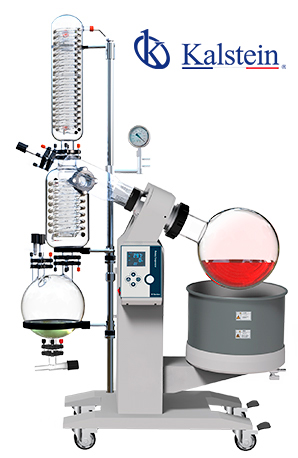
Revolutionizing Laboratory Efficiency: The Comprehensive Guide to Kalstein Rotary Evaporators
Kalstein Rotary Evaporator: Unmatched Excellence in the Laboratory Kalstein's rotary evaporators are emblematic of the brand's commitment to precision and advanced technology. Having personally experienced their equipment, I can attest to how these devices empower scientists and researchers to achieve unparalleled efficiency in solvent evaporation. The sleek design is coupled with user-friendly f
Modern Rotary Evaporators: Solutions for Fast and Safe Evaporation
Rotary evaporators have revolutionized the field of evaporation in laboratories around the world. These devices are essential for those seeking efficient, safe, and controlled evaporation of solvents. As someone who has had the opportunity to test and work with various rotary evaporator systems, I can say that the current models, especially those from Kalstein, stand out for their quality and performance.
Significant Advances in Laboratory Technology: An In-Depth Look at Kalstein's Rotary Evaporators
In the dynamic world of laboratories, rotary evaporators play a crucial role. An iconic piece of equipment in chemistry and biology, they are indispensable for efficient distillation and evaporation. This article explores the importance of rotary evaporators and the advantage brought by Kalstein, a leading global manufacturer, in this area.
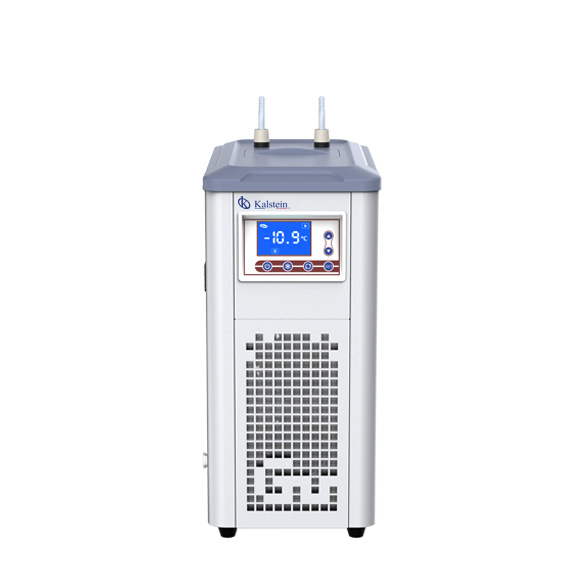
Focus on the Compact Recirculation Chiller for Rotary Evaporators in Laboratories
Research and experimentation tasks in a laboratory are necessarily linked with the use of efficient and precise equipment, and the compact recirculation chiller for rotary evaporators is no exception. Kalstein, as a prominent manufacturer in this industry, commits to providing high-quality laboratory equipment solutions. With innovation and precision at the heart of its commitment, Kalstein has designed a Compact Recirculation Chiller that redefines efficiency in the laboratories, affordable in relation to its price, and guaranteeing unmatched operability in the purchase of this equipment.
rotary evaporator offer catalog
Guides about rotary evaporator
Complete guides to choose rotary evaporator
Exploring the Rotary Evaporator: Efficiency and Innovation in the Laboratory
Rotary Evaporator, Kalstein Brand The Kalstein Rotary Evaporator stands as a symbol of innovation and reliability in the world of scientific research and laboratory operations. Having worked with these machines, I can certainly vouch for th
Leer más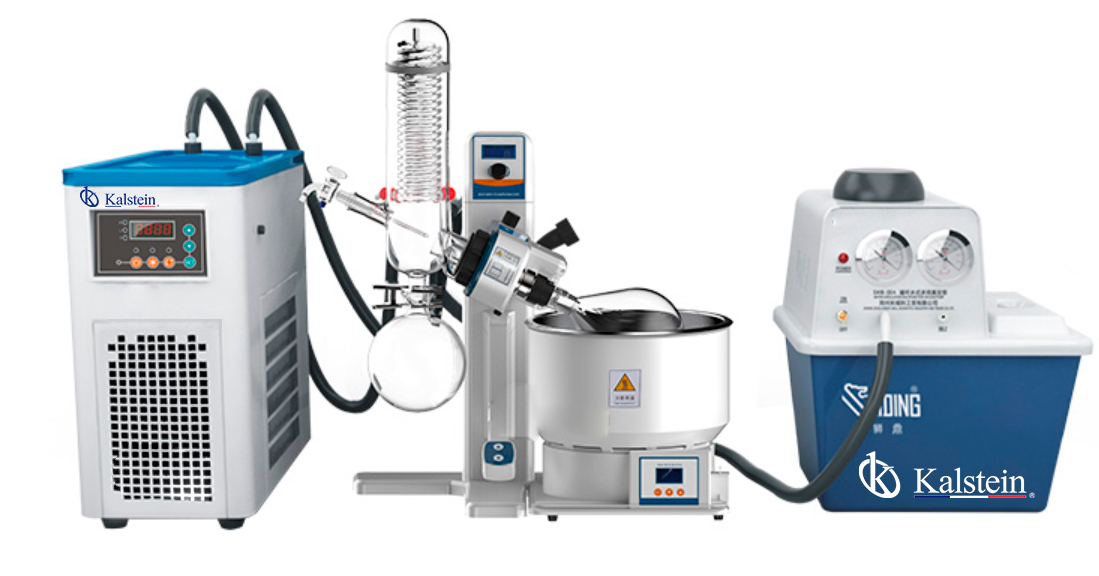
What is a Rotary Evaporator?
The rotary evaporator, commonly called rotary evaporator, is a equipment used in organic chemical laboratories, and indispensable for the efficient and smooth removal of solvents from evaporative samples. Usually, in laboratories the equipm
Leer más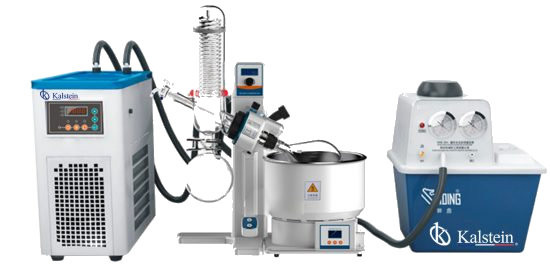
Organic chemistry: How do you operate a rotary evaporator?
Organic chemistry is the branch of chemistry that is responsible for the study of the structure, properties, synthesis and reactivity of chemical compounds formed mainly by carbon and hydrogen, which may contain other elements, usually in s
Leer más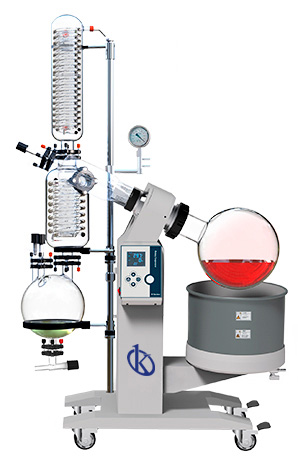
Advantages and Disadvantages of using a Rotary Evaporator?
A Rotary evaporator is a laboratory equipment, applied in the chemical sector, capable of separating or rescuing substances at very low pressures, to extract from them the various elements that compose it, through distillation processes, an
Leer másFrequently asked questions about Rotary Evaporator
How to know the prices of Rotary Evaporator?
To know the price of Rotary Evaporator, please send us an email with your request through the contact form AQUI.
What are the delivery times for Rotary Evaporator?
Delivery time depends on stock availability and freight type (air or sea). In stock: air 15-30 days, sea 45-60 days. Out of stock: air 30-60 days, sea 60-90 days.
How to make a purchase of Rotary Evaporator?
You can buy by email ([email protected]), phone (+33 (0) 1 70 39 26 50) or through the official Kalstein website in your country.
How does the warranty work for Rotary Evaporator?
All Kalstein equipment comes with a 1-year warranty against manufacturing defects. The warranty does not cover damage from improper installation or misuse. See our «terms and conditions» AQUI.
Can I request a quote online for Rotary Evaporator?
Yes, you can request a quote for the Kalstein equipment you are interested in directly from our official website. Click AQUI.